Agent-Optimized CLIs: What the hf CLI Redesign Means for the Future of AI
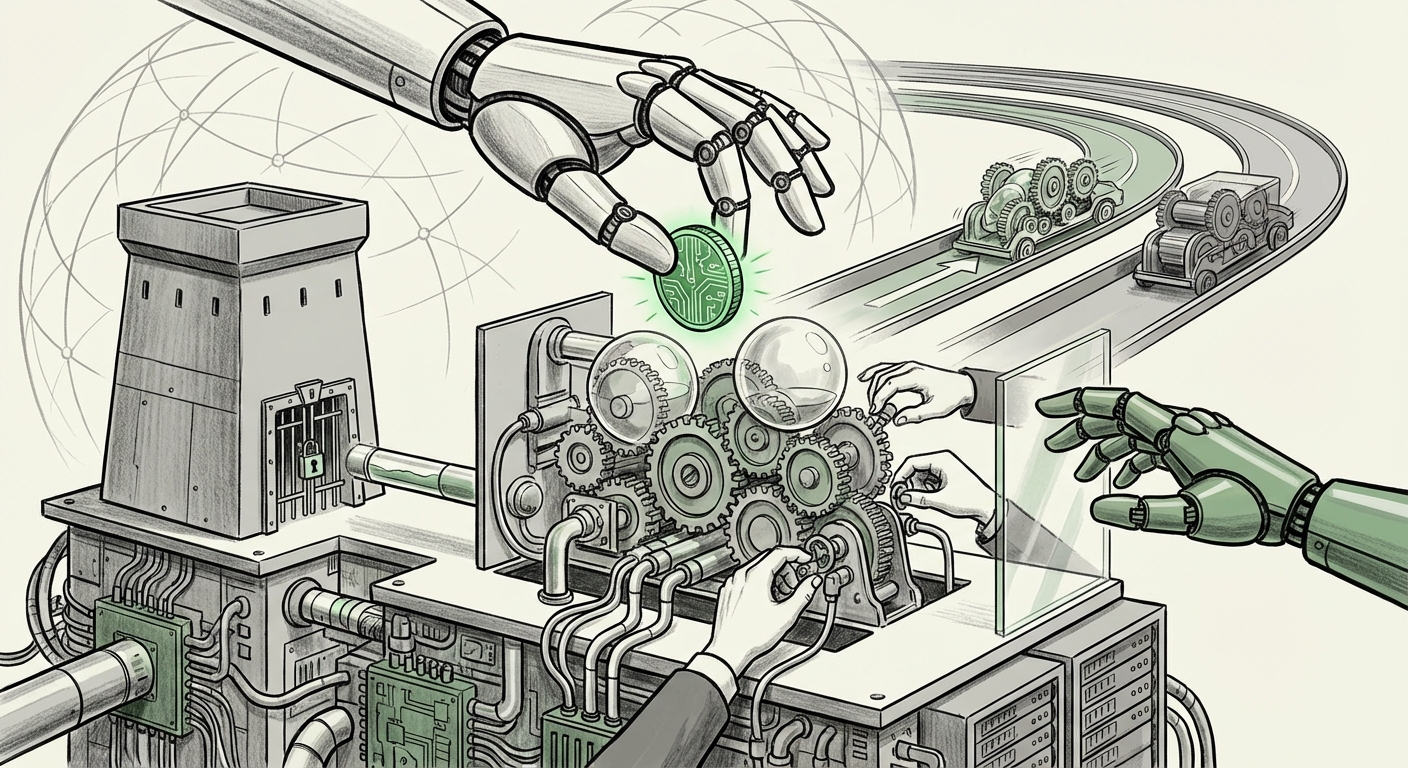
Something quiet but important is happening in the world of developer tools. The hf CLI, the command-line tool used to work with the Hub, is being designed around a new kind of user. Not a person typing commands at a keyboard. An AI agent.
That single design decision tells us a lot about where the AI industry is heading. For years, software tools were built for humans first. They had friendly prompts, colorful output, and helpful hints. The assumption was simple: a person would read the screen and decide what to do next. Now that assumption is breaking. Agents are increasingly the ones pulling models, pushing files, and running pipelines against the Hub. And tools built for humans do not always work well for machines.
So what does it mean when a major piece of AI infrastructure gets redesigned for agents? A lot more than you might think.
The Quiet Shift From Human-First to Agent-First Tools
Think about how a typical command-line tool works today. You type a command. It asks you a question, "Do you want to continue? (y/n)". It prints a nice progress bar. It shows a table of results with pretty spacing. A human reads it and feels good about the experience.
Now drop an AI agent into that same seat. The agent cannot click "y". It cannot read a progress bar that redraws itself. It cannot guess what a table column means. Every interactive step becomes a wall. Every bit of decoration becomes noise that has to be parsed away.
This is the core problem that agent-optimized design solves. When the hf CLI is built with agents in mind, the goal changes. The tool stops asking questions and starts returning answers. It stops decorating and starts structuring. It stops assuming a human will figure things out and starts making every step predictable.
This is not a small tweak. It is a rethink of what a tool is for.
What "Agent-Optimized" Really Means in Practice
When a CLI is designed for agents instead of people, several principles tend to show up. They are worth understanding because they are becoming the new normal across the AI stack.
No Interruptions, No Surprises
Agents run in loops. They plan, act, and check results. Anything that stops the loop and waits for input breaks the whole flow. Agent-friendly tools avoid interactive prompts. They either do the thing or fail with a clear reason. That keeps automated workflows moving without a human standing by.
Output That Machines Can Read
Human-friendly output is often a picture of information. Agent-friendly output is data. Structured, consistent, and easy to parse. When a tool returns clean, predictable results, an agent can decide the next step without guessing. That makes multi-step jobs, like downloading a model, running an evaluation, and uploading results, far more reliable.
Clear Errors and Sensible Exit Codes
For a person, a vague error message is annoying. For an agent, it is a dead end. Agents need to know what went wrong and whether they should retry, change approach, or stop. Consistent error signals turn a failure into something an agent can actually reason about and recover from.
Doing the Same Thing Twice Should Be Safe
Agents retry. Networks drop. Jobs get rerun. If running a command twice causes duplicate uploads, broken state, or weird side effects, automation becomes risky. Agent-optimized tools are built so repeated actions behave predictably.
Self-Describing and Composable
An agent often explores a tool the way a new developer would, by asking what it can do. Tools that clearly describe their own commands and options let agents discover capabilities without a human writing documentation notes for them. Small, focused commands that can be chained together also fit agent workflows far better than one giant, do-everything command.
Authentication That Does Not Need a Browser
Many modern tools assume a human will click through a login page. Agents run headless, on servers, in containers. Tooling that supports token-based, non-interactive access is what makes autonomous work possible in the first place.
Why the Hub Sits at the Center of All This
The Hub is where models, datasets, and other AI artifacts live. It is the distribution layer for modern AI. If agents can reliably work with the Hub from the command line, then a huge amount of AI work becomes automatable end to end.
Consider the loop: an agent finds a model, pulls it down, fine-tunes or evaluates it, uploads the result, and logs what it did. Every one of those steps is a CLI call. If those calls are clean, fast, and machine-readable, the loop runs itself. If they are messy, a human has to babysit every step.
That is the real prize. The hf CLI being designed for agents is not just about convenience. It is about turning the Hub into a place where agents can build, ship, and share AI artifacts on their own. That changes who, or what, can participate in the AI ecosystem.
What This Means for the Future of AI
Three bigger trends flow out of this.
First, agents are becoming first-class users of software. Not a side case. Not a hack. A target audience that tools are designed around. Once you accept that, every product team has to ask a new question: "Does this work for an agent?" For developer tools, the answer will increasingly decide whether they get adopted at all.
Second, the line between a CLI and an API is blurring. A well-designed command-line tool is basically an API you can call from a terminal, or from an agent. That means the same interface serves humans, scripts, and AI workers. Fewer interfaces, more reach.
Third, tool quality becomes a competitive edge. If agents are the ones doing the work, the tools they can use well will win. A tool that returns structured output, handles retries gracefully, and never blocks on a prompt will outrun one that does not, even if the second tool has nicer colors.
Practical Implications for Businesses
This is not just a developer curiosity. It touches how companies actually operate.
- Faster automation. Teams can chain model and dataset operations into pipelines without a human in every step. That cuts time from idea to deployed model.
- Lower operating cost. Work that used to need a person watching a screen can run on its own. That frees skilled people for harder problems.
- Better reproducibility. When every step is a command with a clear input and output, it is much easier to record, rerun, and audit what happened.
- Stronger governance needs. An agent with access tokens can do a lot of damage if it goes wrong. Permissions, scoped credentials, and logging become essential, not optional.
- New security questions. If a tool is easy for an agent to use, it is also easy for a misconfigured agent, or a malicious one, to misuse. Guardrails matter as much as convenience.
There is a flip side too. Companies that build internal tooling should expect the same shift. If your data platform, deployment scripts, or model registry assume a human at the keyboard, agents will struggle to use them. That friction shows up as cost and delay.
Risks and What to Watch
Agent-optimized tools are powerful, but they are not magic. A few things deserve attention.
Silent failure is worse than loud failure. When a tool is built for machines, humans may stop watching. If something breaks quietly, the damage can spread before anyone notices. Clear logs and alerts are the answer.
Permission creep. The easier it is for an agent to act, the more important it is to limit what it can do. Least-privilege access is a habit worth building now.
Over-automation. Some steps still benefit from human judgment, especially anything that ships to customers. Knowing where to keep a human in the loop is a design skill, not a weakness.
Standards and lock-in. If every platform builds its own agent-friendly interface, portability suffers. Watch for shared conventions to emerge. Those that do will probably win broader adoption.
Actionable Insights: What to Do Now
- Audit your tooling for agent readiness. Look for interactive prompts, human-only output, and browser-based logins. Those are your biggest blockers.
- Prefer structured output. If your internal tools can emit machine-readable results, do it. It pays off the moment you add automation.
- Use scoped credentials. Give agents the smallest set of permissions they need, and rotate tokens regularly.
- Add observability. Log what agents do, where they do it, and what happened. You cannot govern what you cannot see.
- Design commands to be composable. Small, predictable steps beat one giant script that does everything.
- Test with an agent in mind. Before you ship a tool, run it the way an agent would: headless, non-interactive, and scripted.
- Train your team on the shift. The people who understand agent-friendly design will be the ones who unlock the next wave of automation.
The Bigger Picture
The redesign of the hf CLI for agents is a signpost. It shows that the AI world is starting to treat agents as real users, with real needs, real limits, and real workflows. That is a big mental shift. For years, we asked how AI could fit into tools built for people. Now we are asking how tools should change so AI can work inside them.
That question will shape the next few years of software. The tools that answer it well will move faster, cost less to run, and unlock work that was never possible before. The tools that ignore it will quietly fall behind, not because they are bad, but because their intended users changed.
The future of AI is not just smarter models. It is an ecosystem of tools that agents can actually use. The hf CLI is one early, clear example of what that looks like. Expect many more.