Meta's Muse Glimmer: Why a Local, Agentic, Multimodal Open-Source AI Model Changes Everything
Meta is back. That is the headline, and it is worth pausing on. On August 10, 2026, Meta introduced Muse Glimmer, a new AI model described with four words that carry a huge amount of weight: local, agentic, multimodal, and open source.
Most AI announcements in the past few years have followed a familiar pattern. A company shows off a bigger model, running in a giant data center, that you can only reach through a subscription or an API. You send your data to someone else's computer, you pay per use, and you hope the rules do not change under you.
Muse Glimmer appears to be a direct answer to that pattern. And the fact that Meta is the one making the move, a company with the resources to compete at the very top of the AI race, tells us something important about where the industry is heading.
The Four Words That Matter Most
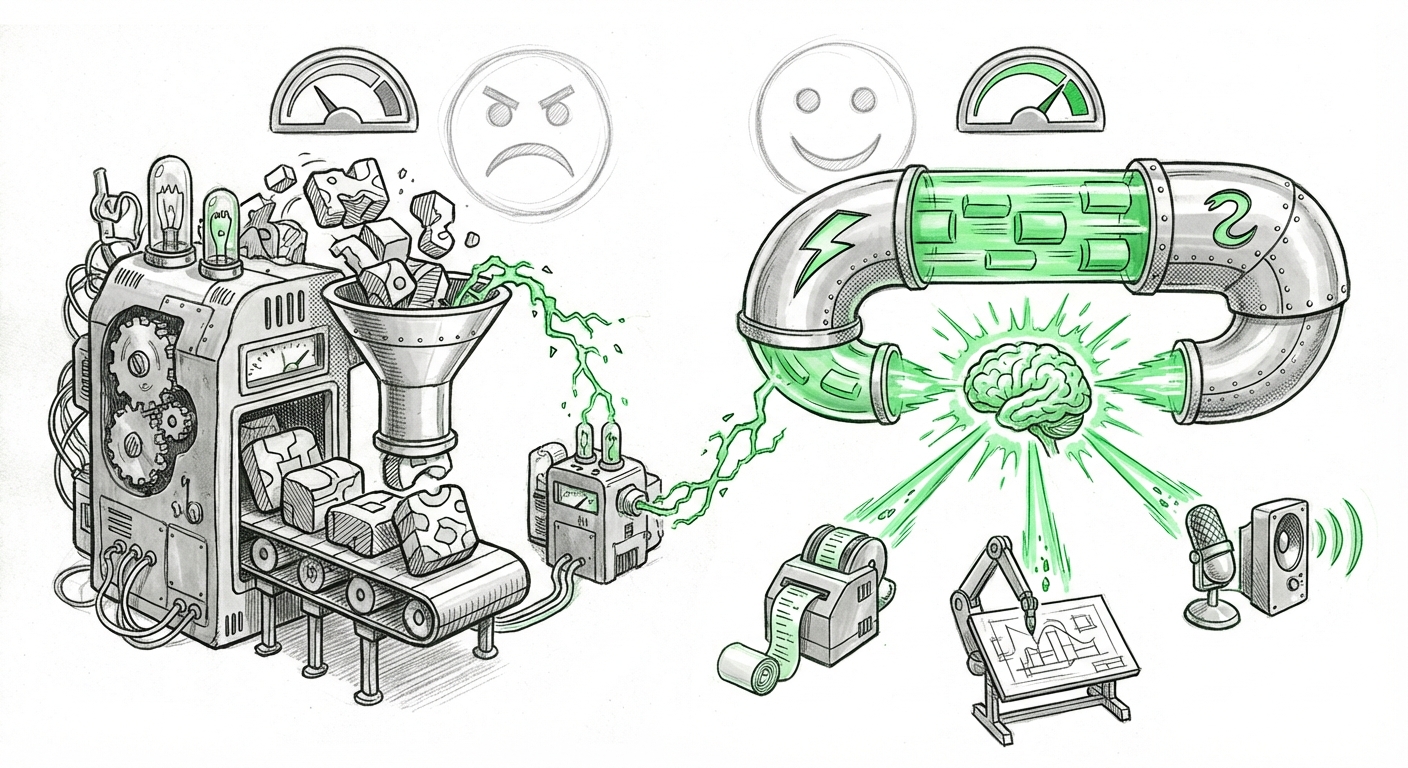
Each of those four descriptors is a trend on its own. Put together in a single model, they create something new. Think of it like a car. A fast engine is nice. Good brakes are nice. All-wheel drive is nice. But a car that has all three is a different machine entirely, it can go places the others cannot.
Muse Glimmer is being positioned as that kind of machine. Let's break down what each piece means, and why the combination matters so much.
Local: AI That Stays on Your Side of the Wall
The word "local" is the quiet revolution here. Most powerful AI today runs in the cloud. You type something, it travels across the internet to a data center, gets processed, and comes back. That works fine, until it doesn't.
Local AI flips the model. The intelligence runs on hardware you control, your laptop, your phone, your workstation, or a server sitting in your own building. Your data never leaves. There is no per-query bill. There is no outage on someone else's end that stops your work.
For businesses, this solves a set of problems that cloud AI could never fully solve:
- Privacy and compliance. Regulated industries, healthcare, law, finance, government, often cannot send sensitive data to an outside vendor. A local model removes that barrier entirely.
- Cost predictability. Instead of usage fees that scale with every click, you pay for hardware once. Heavy users win big.
- Reliability. No internet connection required. No rate limits. No surprises.
- Latency. A local model can respond instantly, because it is not waiting on a round trip across the network.
There are trade-offs, of course. Local models are constrained by the hardware they run on. But the direction of travel is clear: the gap between what runs in a data center and what runs on a desk is narrowing fast. Meta betting on "local" is a signal that the company believes that gap is about to close in a meaningful way.
Agentic: From Answering Questions to Getting Things Done
If "local" is about where AI runs, "agentic" is about what it does.
The first wave of AI assistants was reactive. You asked a question. It gave an answer. Then you had to do the actual work yourself, copy the text, open the spreadsheet, send the email, book the flight.
Agentic AI is different. An agent can take a goal and break it into steps. It can use tools. It can read a document, pull out the relevant numbers, update a system, draft a message, and check its own work. It can operate over hours or days rather than seconds.
This is a much bigger deal than it sounds. The moment AI stops answering and starts acting, the value shifts from "helpful" to "productive." And the moment it can act locally, it can act on your actual files, your actual systems, and your actual workflows, without shipping your company's secrets to a third party to make it happen.
That combination, agentic plus local, is where things get genuinely interesting for business. It means an agent that knows your documents and can operate on them directly, running on a machine you own.
Multimodal: AI That Understands the Way Humans Actually Communicate
Humans do not think in plain text. We point at things. We sketch ideas. We send voice notes. We photograph a whiteboard and expect someone to understand it.
Multimodal means the model can handle more than one kind of input, text, images, audio, and likely more, and work across them together. You can show it a chart and ask what changed. You can hand it a photo of a receipt and ask it to log the expense. You can speak a request and have it come back with a written answer and a diagram.
For everyday use, this is the difference between a tool you have to learn and a tool that meets you where you are. For technical teams, it means one model can handle a much wider range of tasks instead of stitching together three or four specialized systems.
Multimodal systems also tend to be more useful in the physical world, factory floors, warehouses, clinics, field work, where the input is rarely a clean paragraph of text.
Open Source: The Part That Shifts the Balance of Power
The final word may be the most consequential. Open source means the model is not a locked box. People can inspect it, run it, adapt it, and build on it.
This matters for three reasons.
First, trust. When you can look inside a system, you can verify what it does. For companies making decisions about customer data, that transparency is worth real money.
Second, control. Open models cannot be taken away. If you build your business on a model you can download and keep, no vendor can raise prices, change terms, or shut it down. You own your stack.
Third, speed of innovation. A closed model improves at the pace of one company. An open model improves at the pace of everyone who uses it. Every researcher, startup, and hobbyist who tinkers with it can find a fix or a new use that benefits the whole ecosystem.
Meta's willingness to release Muse Glimmer openly says something about strategy too. Open models are extremely good at becoming standards. If enough developers build on Muse Glimmer, Meta wins influence across the entire industry, even without charging a toll for every use.
What This Means for the Future of AI
Step back and look at the four pieces together, and a bigger picture forms. The AI industry has been organized around a simple assumption: the smartest models live in the cloud, and everyone else rents access.
Muse Glimmer challenges that assumption on every front. It says the smartest models can also live with you. That they can do things, not just talk. That they can see and hear, not just read. And that they can be yours, not rented.
If that direction holds, three shifts follow.
The cost of intelligence falls sharply. Cloud AI has a per-use price built in. Local, open AI has almost none. When the marginal cost of a task drops toward zero, people use it for far more things. That is how technology moves from a premium product to a basic utility.
Capability moves to the edge. Instead of one giant brain in a data center, you get many capable brains everywhere, on devices, in factories, in hospitals, in cars. That changes what is even worth building.
Competition gets messier and healthier. When strong models can be downloaded freely, the differentiator stops being "who has the best model" and becomes "who builds the best product and workflow around it."
Practical Implications for Businesses
For anyone running or building a company, the practical questions change.
Data strategy becomes the main event. If the model is available to everyone, your advantage is not the model. It is the data you feed it and the processes you build around it. Companies that organize their internal knowledge well will get far more out of a model like Muse Glimmer than companies that do not.
The math on build-versus-buy shifts. Tasks that were too expensive to automate at per-query pricing may suddenly make sense when running locally. Go back and revisit projects you shelved for cost reasons.
Vendor risk drops. Relying on a single closed provider is a real business risk. Open, locally runnable models give teams a fallback and a bargaining position.
Small teams can punch above their weight. When a powerful model is free and runs on hardware you already own, a five-person company can build things that used to require a big engineering budget.
Practical Implications for Society
The wider effects are just as significant, and they cut both ways.
On the positive side, local and open AI lowers the entry barrier dramatically. A clinic in a rural area, a school with a tight budget, or a developer in a country with limited cloud access can all run the same class of intelligence as a large corporation. That is a genuine step toward spreading the benefits of AI more widely.
It also puts a check on concentration. Open source makes it much harder for any single company to become the only gatekeeper to advanced AI.
The risks deserve equal attention. Agentic systems that can take actions need guardrails, an AI that can send emails, move files, or spend money can also make mistakes at scale. Multimodal systems raise new privacy questions, because images and audio can contain far more personal detail than text. And open models can be misused by bad actors just as easily as used by good ones.
None of these are reasons to slow down. They are reasons to be deliberate about how these systems are deployed, monitored, and governed.
Actionable Insights: What to Do Now
- Get your data in order. The organizations that benefit most from open models are the ones whose information is clean, organized, and searchable.
- Run a local pilot. Pick one real workflow, document processing, customer support drafts, internal search, and test a locally run model against your current approach.
- Map your agentic opportunities. List the tasks your team does repeatedly that involve multiple steps. Those are the best candidates for agentic automation.
- Watch the multimodal use cases. Look for places where a photo, a scan, or a recording could replace manual data entry.
- Build an exit plan. Avoid hard-coding your business to any single AI provider. Keep your options open.
- Set clear rules for agents. Decide in advance what an automated system is allowed to do on its own, and what needs a human check.
The Bottom Line
The most important thing about Muse Glimmer is not any single feature. It is the combination. Local makes it private and cheap. Agentic makes it useful. Multimodal makes it natural. Open source makes it yours.
Taken together, those four qualities describe a very different future for AI than the one most people have been imagining, not a distant service you rent by the token, but a capable partner that lives on your own hardware, understands how you actually work, and answers to you.
Meta says it is back. If Muse Glimmer delivers on the promise of its four-part description, the bigger story is that the whole industry may be heading in the same direction.