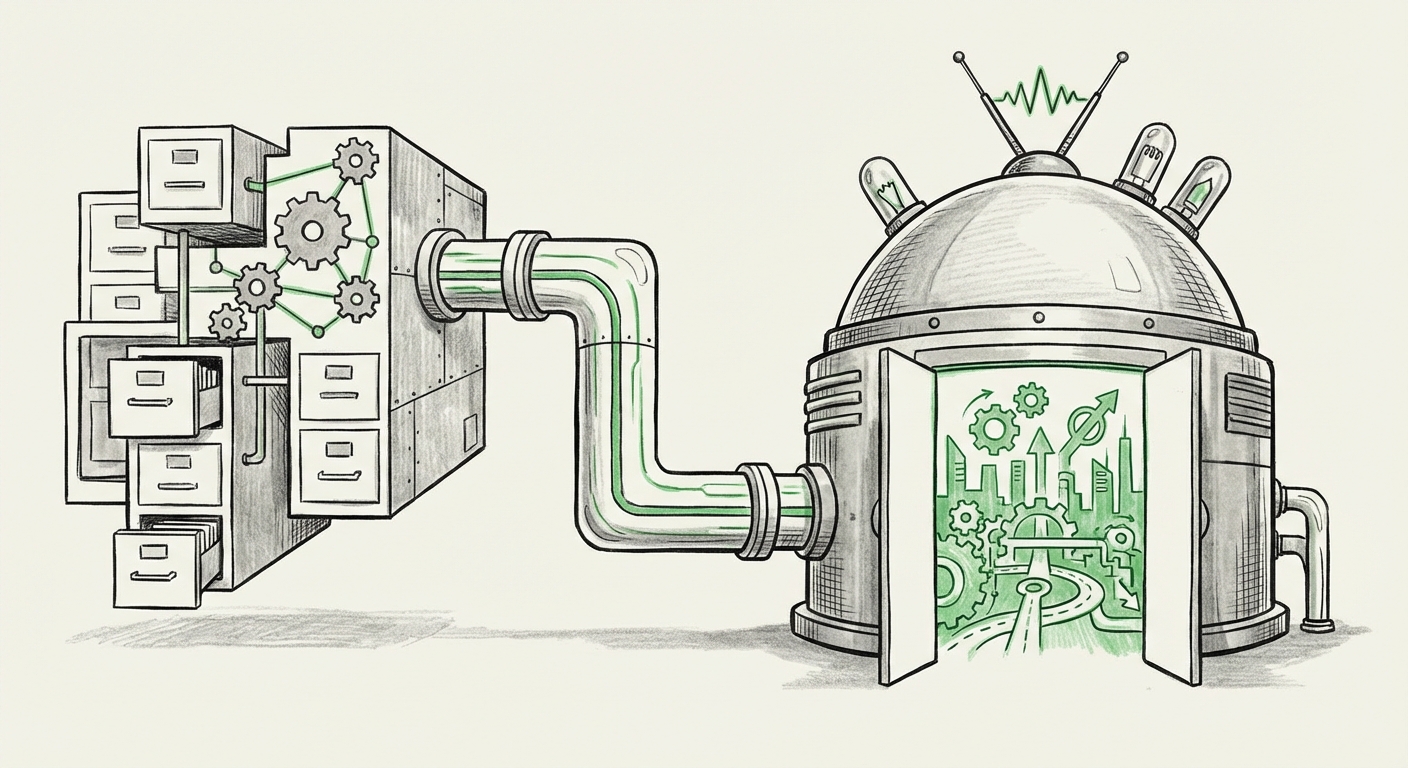
Meta Open-Sources Rebalancer: The C++ Solver Handling 40 Million Placement Problems a Day
When people picture AI breakthroughs, they usually picture chatbots, image generators, or robots. But some of the most important work in AI right now is happening somewhere much quieter: inside the plumbing that keeps giant computer systems running smoothly. Meta AI has just open-sourced a tool called Rebalancer, and the headline number is striking. It runs about 40 million placement problems a day.
That is not a typo. Forty million. Every single day. And it is written in C++, one of the oldest and fastest programming languages still in heavy use. This release tells us something important about where AI is heading, not toward bigger chat models, but toward smarter infrastructure that keeps those models alive.
What Is a Placement Problem, Anyway?
Forget the jargon for a second. A placement problem is just a matching puzzle. You have a bunch of things that need a home, and a bunch of homes that can take them. Your job is to place everything in the best possible way.
Think of a school assigning students to classrooms. You want classes to be balanced, teachers to have the right subjects, and nobody stuck in a room that is too small. Now imagine doing that with millions of students and thousands of rooms, and redoing it every few seconds as things change.
That is what Rebalancer does at a massive scale. In computing, placement problems show up everywhere:
- Deciding which server should host which piece of data
- Spreading workloads so no single machine gets overloaded
- Assigning jobs to machines as demand shifts
- Moving resources around when hardware fails or traffic spikes
These decisions sound boring. They are also the difference between a service that feels instant and a service that crashes on a busy day.
Why C++ Is Still the Engine Room of AI
There is a popular idea that modern AI is all Python. That is only half true. Python is where researchers write and test ideas, but when those ideas need to run billions of times without slowing down, the code gets rewritten in something faster. C++ is usually that something.
Rebalancer being a C++ assignment solver matters for a simple reason: scale punishes slow code. If you are solving 40 million problems a day, every microsecond counts. A tool written in a slower language might work fine in a test, then fall apart under real traffic.
This is a pattern worth watching across the industry. The flashy AI work gets the headlines, but the competitive edge increasingly lives in fast, low-level systems code that decides where work goes and how resources get shared. Companies that treat this as an afterthought tend to hit a wall. Companies that invest in it can quietly serve more users on the same hardware.
40 Million Problems a Day: What the Scale Really Means
Let us put that number in perspective. Forty million problems a day works out to roughly 460 problems every second, running around the clock. And these are not simple puzzles. Real placement decisions come with constraints, conflicting goals, and a moving target as systems change underneath them.
Three lessons jump out from that figure:
1. The system never sleeps
Placement is not a one-time setup task. It is a continuous loop. Hardware fails, traffic swings, new capacity comes online. Something has to keep re-solving the puzzle without human help.
2. Efficiency is measured in real money
Better placement means better use of the machines you already own. That translates directly into lower costs, less energy used, and more capacity for the same budget. At this volume, even small improvements compound into enormous savings.
3. Automation at this scale is unavoidable
No team of engineers can hand-tune millions of decisions daily. The solver has to be trusted to act on its own. That is the same story playing out across AI: humans set the goals, machines handle the repetition.
Why Open-Sourcing Rebalancer Is a Big Deal
Meta could have kept Rebalancer private. Instead, it released the code for anyone to use. This is a strategic move, not a giveaway, and the reasons are worth understanding.
First, it raises the floor for everyone. Smaller companies cannot build a team to write a world-class placement engine. Handing them one means they can compete on ideas rather than on infrastructure budgets.
Second, open code gets better faster. When thousands of engineers can read, test, and improve a system, bugs get found and fixed sooner. Contributors bring problems the original team never faced.
Third, it sets a standard. If Rebalancer becomes the default way to solve placement, the company behind it gains influence over how the whole industry thinks about the problem, without charging a cent.
There is also a talent angle. Engineers want to work on tools people actually use. A widely adopted open-source project is one of the best recruiting tools in technology.
What This Means for the Future of AI
The most important takeaway is not about one solver. It is about a shift in where AI value is being created.
For years, the story was bigger models and better benchmarks. That race is not over, but the bottleneck has moved. Training and running large models requires staggering amounts of computing power, and that power only produces value if it is used efficiently. Placement, scheduling, and resource management are now first-class AI problems, not background chores.
Expect to see more of this. The next wave of AI tools will not just answer questions, they will run the systems that answer questions. Optimization engines, schedulers, and solvers will become as central to AI platforms as the models themselves.
There is a second trend here too: a reunion between classical optimization and modern machine learning. Assignment solvers come from a long tradition of mathematical optimization. Machine learning comes from a different tradition entirely. The two are merging. Increasingly, AI systems learn patterns from data and then hand off hard, precise decisions to solvers that can guarantee good results fast.
And a third: performance is back in fashion. After years of "just add more hardware," teams are rediscovering that clever, efficient code is cheaper than brute force. A C++ solver handling 40 million problems a day is a reminder that engineering still beats excess.
What This Means for Businesses
If you run a company that depends on computing at any scale, and in 2026, that is almost everyone, here is what to take away.
- Your infrastructure is a product decision. Slow placement shows up as lag, outages, and higher bills. Users feel it even if they never see it.
- Open source lowers your entry cost. Tools like Rebalancer mean you do not have to build from zero. You can adopt, adapt, and focus your engineers on what makes you different.
- Optimization is a cost lever. Getting more out of existing machines is often the fastest path to lower spending. It beats buying more servers.
- Watch the language choices. When a serious company picks C++ for a core system, it signals that speed matters more than convenience at that layer.
Actionable Insights
Want to act on this rather than just nod along? Here is a practical starting list.
- Audit your placement decisions. Ask how work and data get assigned in your systems today, and whether it is automated or manual.
- Try the open-source tool. Run Rebalancer on a small, low-risk problem first. Learn its shape before betting a critical system on it.
- Measure the savings. Track hardware use, energy, and latency before and after. Numbers win budgets.
- Invest in systems talent. The engineers who can write fast, correct code are becoming more valuable, not less.
- Plan for a hybrid future. Expect machine learning to handle prediction and optimization solvers to handle decisions. Design teams that cover both.
The Bigger Picture
Rebalancer will not trend on social media. It is a C++ solver for placement problems, and it sounds about as exciting as a spreadsheet. But the number attached to it, about 40 million problems a day, tells a real story about where AI is going.
The future of AI is not only about smarter models. It is about systems that organize themselves, quietly, millions of times a day, without anyone watching. Open-sourcing tools like this accelerates that future and spreads it beyond a handful of giant companies.
For businesses, the message is simple: the invisible layer is where efficiency is won. For the rest of us, it is a reminder that the most consequential technology is often the technology we never notice at all.