Nunchaku 4-Bit Diffusion Inference Comes to Diffusers: What It Means for Faster, Cheaper AI Image and Video Generation
Something important just happened in the world of AI image and video generation, and it is the kind of change that rarely makes headlines but quietly reshapes entire industries. Nunchaku's 4-bit diffusion inference is now available inside Diffusers, the popular open-source toolkit developers use to run diffusion models. That sentence sounds technical, so let's break down why it matters. In short: the AI models that generate pictures and videos just became dramatically cheaper and lighter to run, and that opens doors that were previously locked shut.
What Just Happened, in Plain English
Diffusion models are the engines behind modern AI art, photo editing, product mockups, and video generation. They work by starting with random noise and gradually cleaning it up, step by step, until a clear image appears. The problem is that each of those steps requires a lot of computing power.
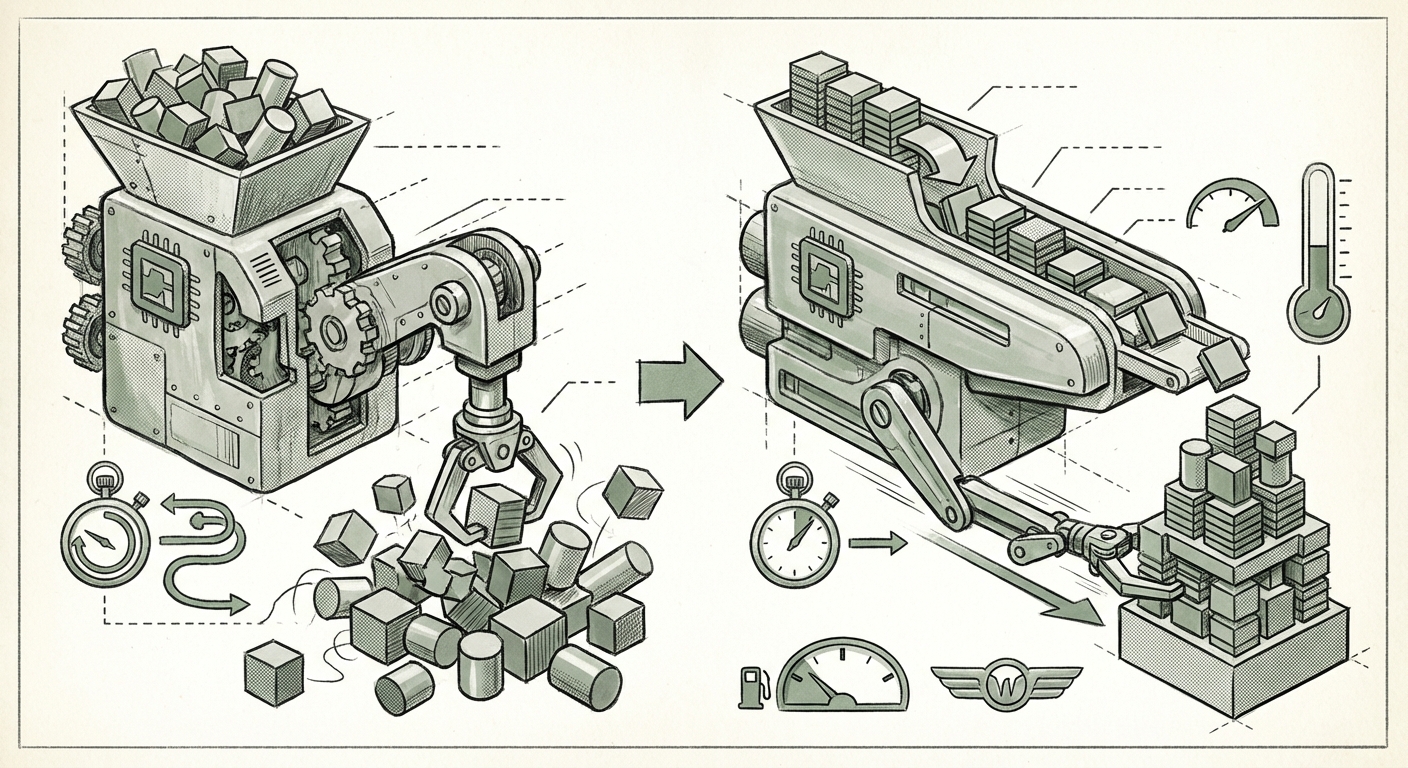
Nunchaku is an approach built around 4-bit inference for diffusion models. Inference simply means "running the model to get an answer," as opposed to training it in the first place. The "4-bit" part refers to how the model's numbers are stored and processed. Most models run at 16-bit precision or higher. Dropping to 4-bit means each number takes up far less space, so the whole model becomes much smaller and faster to run.
The news is that this capability has now been brought into Diffusers. Before, using a highly compressed 4-bit diffusion setup often meant juggling custom code, separate pipelines, and a lot of tinkering. Now it fits into the same workflow developers already use. That is a big deal, because in software, convenience is what drives adoption.
Why Diffusion Models Have Been So Expensive
To understand the significance here, you have to understand the cost problem. A single high-quality AI image can require dozens of denoising steps. A short AI video can require many more, multiplied across every frame. Each step means pushing enormous amounts of data through a neural network.
That has three practical consequences:
- Memory pressure: Big models need big, expensive graphics cards, often more than one.
- Speed limits: Generating content takes time, which hurts anything interactive.
- Cost per generation: Cloud providers charge by the hour, so every second of compute shows up on the bill.
These costs are why so much AI creativity lives in the cloud rather than on your laptop or phone. They are also why many businesses have struggled to justify generative image and video features at scale. If each image costs real money to produce, you need a very good reason to produce thousands of them.
Quantization attacks all three problems at once. By shrinking how much memory each part of the model consumes, you reduce hardware requirements, increase speed, and lower cost. Going as aggressive as 4-bit is the frontier here, because you get the biggest gains, but only if quality holds up. That quality question is exactly what has made this area so hard.
What 4-Bit Actually Changes
Think of a model like a recipe with millions of precise measurements. Running at full precision means following every measurement exactly. Running at 4-bit means rounding many of those measurements to a much smaller set of values.
Do it badly and the cake collapses. Do it well and almost nobody can taste the difference. The entire craft of projects like Nunchaku is in that "do it well" part, finding ways to compress aggressively while preserving the visual quality people actually notice.
When that works, the rewards are substantial:
- Smaller memory footprint means models run on more modest hardware.
- Faster generation means real-time or near-real-time creative tools become realistic.
- Lower cost per image or frame means businesses can offer AI features without losing money on every click.
- Easier local use means more experimentation and more privacy, since data never has to leave a device.
Bringing this into Diffusers multiplies the impact. Diffusers is one of the most widely used libraries in the AI image world. When a technique lands there, it stops being a research curiosity and starts being something thousands of developers can adopt in an afternoon.
What This Means for the Future of AI
The biggest story in AI right now is not just that models are getting smarter. It is that models are getting cheaper to run. That shift is often overlooked, but it is what turns a demo into a product.
From Cloud-Only to Everywhere
When a model can run in 4-bit, it can travel. It can move from a data center to a laptop, from a laptop to a phone, and eventually to edge devices like cameras and kiosks. That changes who can use AI and where. A small design studio without a GPU budget can run the same quality of generation as a large company. A field photographer can edit on location without an internet connection.
The Rise of Real-Time Creativity
Speed changes how people interact with tools. A model that takes thirty seconds feels like a slot machine. A model that responds in under a second feels like a paintbrush. When generation becomes fast enough to keep up with human intent, the entire creative workflow changes. Artists stop prompting and start sculpting. Video generation becomes something you can iterate on, not just request.
Efficiency as the New Frontier
For the last few years, the AI race has mostly been about scale, bigger models, more data, more compute. That race is not over, but a second race has started: efficiency. Who can get the most capability out of the least hardware? Compression techniques like 4-bit inference are the clearest sign that this second race is now serious. Expect more of it, and expect it to matter more than most people realize.
Practical Implications for Businesses
If you run a business, here is what changes.
Unit Economics Finally Work
Generative features have often been a cost center. If producing an image costs a fraction of what it did, suddenly personalization, bulk content creation, and free-tier features become viable. Marketing teams can generate variations at scale. E-commerce platforms can produce product imagery for thousands of items. Publishing operations can create custom visuals on demand.
New Product Categories Open Up
Cheap, fast generation unlocks products that were not possible before. Consider live video effects, in-app creative assistants, on-device photo editing, automated ad variation testing, or interactive design tools that respond instantly. None of these are new ideas. What is new is that the compute bill no longer kills them.
Privacy Becomes a Selling Point
Smaller models can run locally. Local means user data stays on the user's machine. For regulated industries, healthcare, finance, legal, that is not a nice-to-have. It is the difference between using AI and not using it at all.
Vendor Strategy Shifts
When efficient open techniques land in mainstream libraries, the advantage of expensive proprietary pipelines shrinks. Businesses should revisit their build-versus-buy assumptions. The gap between what a cloud service offers and what a well-run open setup can do is narrowing quickly.
What It Means for Society and Creators
Wider access cuts both ways, and it is worth being honest about that.
On the positive side, powerful creative tools are becoming available to people who could never afford them. Independent artists, small nonprofits, students, and creators in regions with limited infrastructure all benefit. The cost barrier to entry is falling fast.
On the other side, cheaper generation also means more generated content. More synthetic images, more synthetic video, more questions about what is real. The same efficiency that empowers a small studio also lowers the cost of misinformation. This is not a reason to slow down adoption, but it is a reason to invest in provenance tools, watermarking, and content verification at the same pace. Efficiency gains in generation need to be matched by efficiency gains in detection and trust.
There is also a labor dimension. When image and video production becomes nearly free, the value shifts from producing content to directing it, taste, judgment, and knowing what is worth making. That is a real transition for creative professionals, and it favors those who adapt early.
Actionable Insights
- Prototype now. If you have an AI image or video feature on your roadmap, test whether a 4-bit diffusion pipeline changes the economics. The answer may surprise you.
- Recheck your hardware assumptions. Workflows you dismissed as too expensive six months ago may now fit on hardware you already own.
- Plan for local first. Design your product so processing can happen on-device where possible. It is faster, cheaper, and better for privacy.
- Watch your quality bar. Compression always involves trade-offs. Test outputs against your real standards, not just benchmarks.
- Update your content policy. Cheaper generation means more generated content in your ecosystem. Have a plan for labeling and verification.
- Invest in taste, not just tooling. When anyone can generate anything, differentiation comes from judgment, brand, and originality.
What to Watch Next
Three things will tell us how big this shift really is. First, whether 4-bit pipelines become a default option in mainstream tools rather than an advanced setting. Second, whether video generation, the most compute-hungry area, sees the same efficiency gains as images. Third, whether hardware makers respond by optimizing for low-bit inference, which would compound the whole trend.
If all three happen, the result is not just faster AI art. It is a world where high-quality generative media runs on ordinary devices, quietly embedded in the software people already use every day.
The Bottom Line
Bringing Nunchaku's 4-bit diffusion inference to Diffusers is a technical milestone, but its real importance is economic. It lowers the cost of running the most compute-hungry models in creative AI, and it puts that capability into a toolkit developers already trust. Lower cost plus easier access equals broader adoption. That is the pattern that has driven every major wave of computing, and it is happening again right now with AI media generation.
The companies and creators who move early on efficiency, not just on raw capability, will be the ones positioned best for the next few years. The models are impressive. The economics are what will decide who gets to use them.