AI Kernels Just Got a Major Update: Why the Code Underneath Your Models Is the New AI Battleground
When the 🤗 Kernels project published a major set of updates in July 2026, most of the AI world was busy arguing about model sizes, benchmark scores, and chatbot features. That reaction, or lack of one, is exactly the problem. While everyone stares at the top of the AI stack, the real race is happening at the bottom, in small, highly specialised pieces of code called kernels. And that race just sped up.
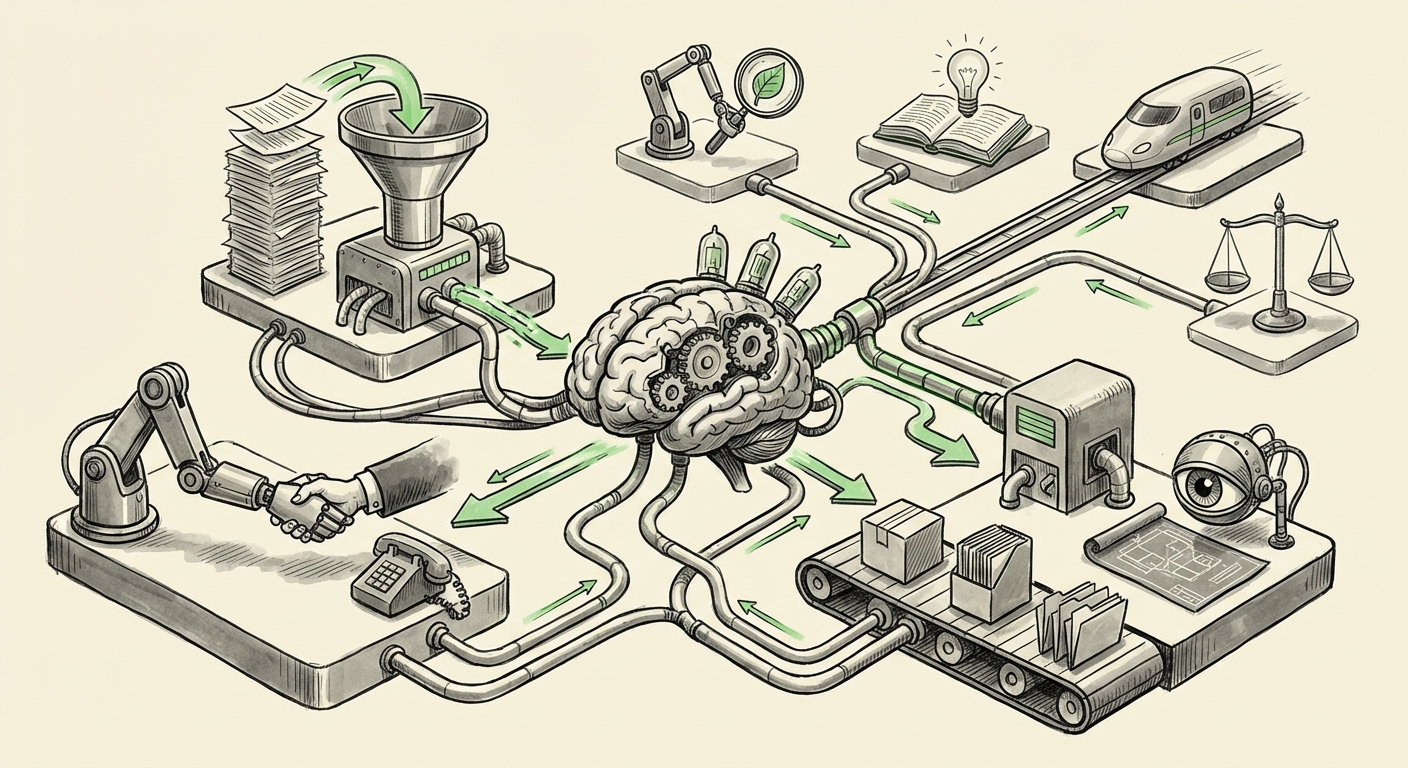
Here is the short version: kernels are the link between an AI model and the physical chip it runs on. If your model is a race car, the kernel is the gearbox. You can have the best engine in the world, but if the gears do not shift cleanly, you are not winning anything. The July 2026 update to the 🤗 Kernels project is a signal that the industry is finally treating that gearbox as a first-class product, not an afterthought buried in a framework.
What Exactly Is a Kernel?
Strip away the jargon and a kernel is just a small function that tells a processor how to perform one specific math job as fast as possible. When a model generates a sentence, recognises a face, or predicts a stock price, it is really running millions of tiny calculations, mostly multiplications and additions. Kernels are the tuned instructions that make those calculations happen efficiently on a particular piece of hardware.
Why do they matter so much? Because the same math can run at wildly different speeds depending on how it is written. A careless implementation can leave 80% of a graphics chip sitting idle. A great kernel keeps that chip busy from the first cycle to the last. That gap shows up directly in your cloud bill, your latency, and your energy use.
For years, kernels were the quiet domain of a small group of specialists who wrote rare, hand-tuned code for a single hardware vendor. That model is now breaking down, and the Kernels project is one of the clearest examples of what replaces it.
The Big Shift: One Chip Became Many
The clearest trend behind these updates is hardware diversity. Not long ago, if you trained or served an AI model, you used one family of chips and one software toolkit that came with it. Life was simple, even if it was expensive.
Today, AI runs on a much wider spread of silicon: data-centre accelerators from several competing vendors, cloud providers' own custom chips, and a growing fleet of phone, laptop, and edge processors. Every one of those has different memory layouts, different instruction sets, and different quirks.
Writing separate, hand-tuned kernel code for each of them is not sustainable. It is slow, it is expensive, and it locks teams into whichever vendor they happened to build for first. The alternative, which the Kernels project embodies, is to treat kernels as portable, reusable, shareable artefacts. Write it once, publish it, and let it run on whatever hardware is available, with the system picking the best version automatically.
That sounds like a small engineering detail. It is actually a structural change in how the AI industry works.
What the July 2026 Update Really Signals
A "major update" to a kernel library is not a single feature. It is a statement about priorities. Three messages stand out.
1. Performance Is Being Productised
Kernels used to be delivered inside a framework, and you got whatever came with it. Now they are being packaged, versioned, and updated on their own schedule. That means improvements can reach users far faster than a full framework release would allow. It also means performance work becomes measurable and comparable, you can see which kernel version performs best on which device, rather than guessing.
2. The Community Is Becoming the Optimisation Engine
No single company can hand-write optimal kernels for every chip on the market. The only way to keep up is to let a broad community contribute, review, and improve them. This mirrors what happened to open-source software in general: the crowd outpaces any single vendor's roadmap. The catch, and it is a big one, is that community-contributed compute code needs serious quality control, which brings its own challenges.
3. Speed Is Now a Shared Resource
When kernel improvements are published openly, everyone benefits at once. A 2x speedup in a common operation does not just help one company's model, it helps every model that uses that operation. This is how the open ecosystem quietly ratchets up the entire industry's efficiency.
What This Means for the Future of AI
Cheaper, Faster AI for Everyone
The single biggest practical consequence is cost. Inference, running a model after it has been trained, is where most AI spending now happens, because it is a bill you pay every time someone uses your product. Better kernels mean the same hardware serves more users or produces answers faster. At scale, trimming overhead at the kernel level can translate into very large savings, and those savings are what make advanced AI features affordable enough to be built into ordinary products.
The End of Single-Vendor Lock-In
When kernels are portable, the chip becomes more of a swappable part and less of a permanent commitment. That is good news for buyers, because it forces hardware makers to compete on price and performance rather than on software gravity. It is also good news for newer chip makers, who historically struggled to get anyone to write optimised code for their hardware. A shared kernel ecosystem lowers that barrier dramatically.
AI Moves Off the Server
Portable kernels matter even more at the edge. Phones, laptops, cameras, cars, and industrial sensors all have different chips and tight power budgets. Without efficient, hardware-specific kernels, running a capable model on-device is impractical. With them, more AI can run locally, faster, more private, and without a round trip to the cloud. Expect this to be one of the defining product trends of the next few years.
A New Layer of Open Infrastructure
We have watched open model weights change the AI landscape. Kernel libraries represent the next layer down: open compute infrastructure. If models are open but the fast code that runs them is locked to one vendor, the openness is only partial. Making the performance layer open and shareable completes the picture.
Practical Implications for Businesses
You do not need to write kernels to be affected by them. Here is what this shift means on the ground.
- Your inference costs are not fixed. Much of what you pay for AI serving comes from software efficiency, not just raw chip power. Regularly re-testing your stack against newer kernel versions can cut costs without changing a single line of your application code.
- Your hardware choices get wider. As portable kernels mature, the cost of switching hardware falls. That gives you leverage in negotiations and a real plan B if a supplier raises prices or misses deadlines.
- Latency becomes a design variable. Faster kernels make real-time features, voice agents, live translation, instant recommendations, practical in places they previously were not.
- The talent you need is changing. Demand is shifting from people who master one vendor's toolkit to people who understand performance across multiple platforms.
- Benchmarking becomes a competitive advantage. Teams that measure performance honestly, on their own workloads, will make better build-versus-buy decisions than teams that trust marketing numbers.
Risks and What to Watch
It would be naive to treat this as pure upside. A shared, community-driven kernel ecosystem introduces real risks.
Trust and correctness. A kernel that is subtly wrong can produce answers that look plausible but are not. Fast code that is quietly incorrect is worse than slow code that is right. Verification and testing tooling has to mature alongside the ecosystem.
Security and supply chain. Compute-level code runs close to the metal. Community contributions need vetting, signing, and clear provenance, or they become a tempting target.
Fragmentation. A healthy ecosystem can also splinter into dozens of half-maintained projects. Consolidation around shared standards is essential, and it is not guaranteed.
Maintenance burden. Every supported chip and every new hardware generation adds work. Someone has to pay for that, through sponsorship, vendor participation, or commercial support models.
How to Prepare: Actionable Steps
- Instrument your current stack. Measure latency, throughput, and cost per request before you change anything. You cannot capture gains you cannot see.
- Keep your serving layer loose. Avoid baking hardware-specific code into your application. Use abstractions that let you swap in better kernels or different chips without a rewrite.
- Re-evaluate quarterly. Kernel performance moves faster than infrastructure refresh cycles. Put it on the calendar.
- Test on your own traffic. Published benchmarks are a starting point, not a verdict. Real workloads reveal real winners.
- Contribute or sponsor if you depend on it. If open compute infrastructure is load-bearing for your business, treating it as free is a strategic mistake.
- Plan for on-device. If your roadmap includes mobile or edge AI, assume local inference will get much more capable, and design privacy and offline features around that.
The Bottom Line
The July 2026 Kernels update is not a headline-grabbing launch. There is no flashy demo, no dramatic benchmark chart designed for social media. And that is precisely why it deserves attention. The AI industry's most durable advantages have never come from the model on top, they come from the layer underneath, where cost, speed, and portability are decided.
We are watching the performance layer of AI become open, portable, and shared. That means cheaper intelligence, more hardware competition, more AI running on the devices we already own, and a much lower barrier for anyone who wants to build with it. For businesses, the message is simple: the model you choose gets the headlines, but the kernels you run it on determine your margins. Ignore them at your own cost.