Zero-Egress AI: How SkyPilot and Hugging Face Are Breaking Cloud Lock-In
For years, one quiet line item has quietly eaten AI budgets: the fee you pay to move your own data out of a cloud provider. That fee is called egress, and it has shaped where companies store models, where they train them, and which cloud they feel trapped by. Now a new setup promises to end that trap. SkyPilot, the open-source tool for running AI workloads on any cloud, can now pair with Hugging Face as a storage layer, giving teams what amounts to zero-egress storage for their AI data.
That sounds technical, but the idea is simple. You keep your models and datasets in one place that doesn't charge you to pull them out. You run the actual compute wherever it is cheapest or fastest that day. And the two sides talk to each other without a tax in the middle.
The Egress Problem, Explained Simply
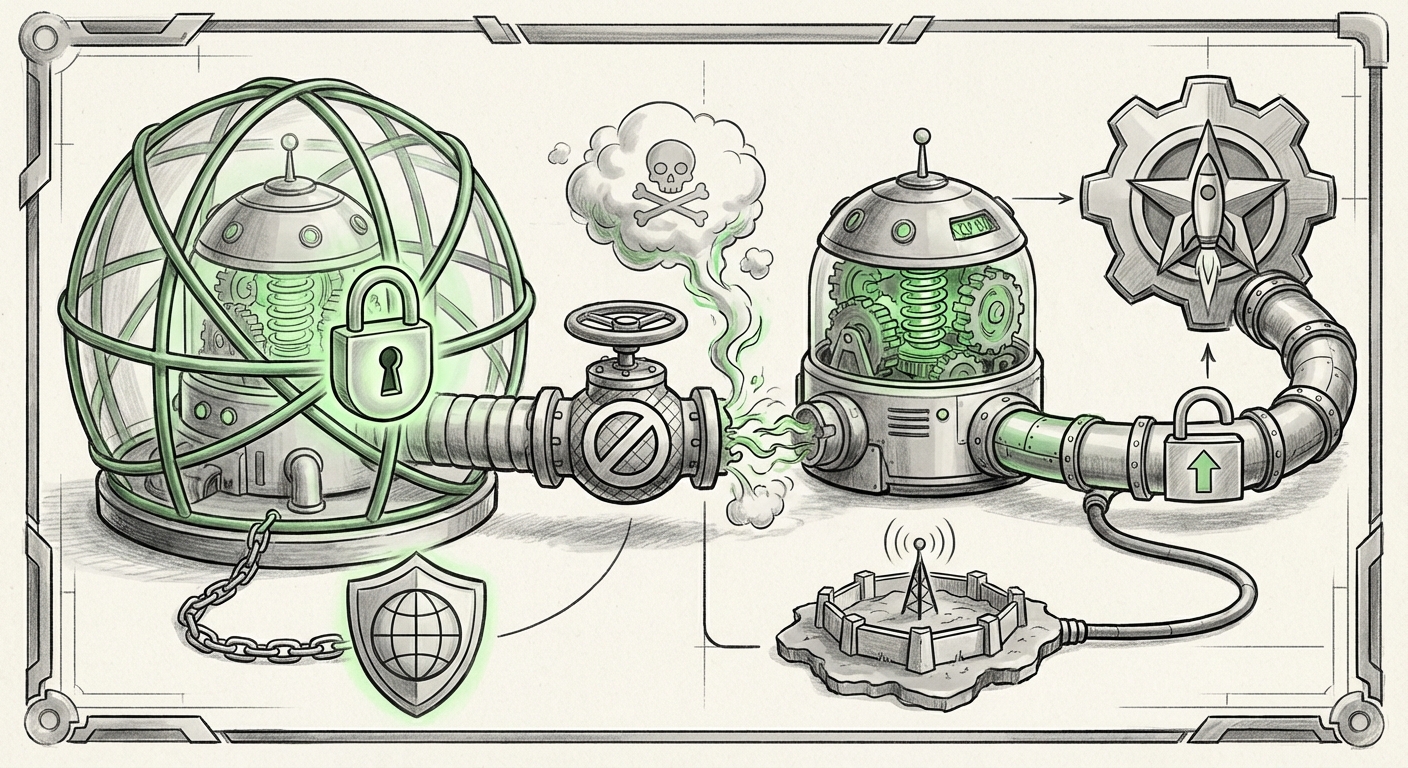
Cloud computing works a bit like a hotel with a very expensive minibar. It is cheap to check in, but every time you take something out, your data, the bill gets steep. Providers charge to move data out of their network, and for AI teams, that can mean moving enormous files: datasets with billions of words, model weights that take up gigabytes, and checkpoints that get saved over and over during training.
This creates what engineers call data gravity. Once your data lives inside one cloud, it becomes painful and costly to move. So you stay. You run your AI there even when another cloud has cheaper GPUs, faster chips, or room to spare. The result is vendor lock-in, not because a provider is the best choice, but because leaving is too expensive.
That lock-in has real consequences. When demand for AI chips spikes, the cloud with your data may not have capacity. You wait in line. You pay premium prices. Or you simply go without, while a competitor running somewhere else gets their model trained first.
What SkyPilot Actually Does
SkyPilot's core promise, as its tagline puts it, is straightforward: run AI workloads on any cloud. Instead of writing custom scripts for each provider, teams describe the job once and let SkyPilot place it. It can hunt for available GPUs, use cheaper spot or interruptible capacity, and move the work to whichever cloud makes sense in the moment.
The missing piece was always storage. If you run on any cloud but your data is locked inside one of them, you haven't really escaped. You have just added a step. By treating Hugging Face as the storage home base, the new approach splits the two concerns cleanly:
- Storage lives with Hugging Face, a place that already hosts models and datasets and is built for sharing them.
- Compute lives wherever it is cheapest, fastest, or available right now.
- Egress drops toward zero, because you are no longer paying a toll every time a training run needs the data.
In plain terms, this is the difference between owning your data and renting a room for it. One option gives you freedom. The other quietly keeps you in place.
Why This Matters for the Future of AI
1. It Turns the Cloud Market Into a Real Market
Competition only works when buyers can switch. Today, AI teams often can't switch clouds without a painful data migration. Zero-egress storage changes that. If moving a model is cheap, then providers have to compete on price, speed, and reliability instead of holding your data hostage. That is better for everyone except the incumbent with the biggest moat.
2. It Makes AI Capacity More Fluid
The AI industry keeps running into the same wall: not enough compute. But the shortage is uneven. One region has idle chips while another is sold out. When workloads can flow freely between clouds, that idle capacity gets used. This is the basic idea behind "sky computing", treating many clouds as if they were one big pool. Real portability is what turns that idea from a slide deck into a shipping product.
3. It Opens the Door for Smaller Players
Startups rarely have the leverage to negotiate big cloud discounts. But they can be ruthless about picking the cheapest option for each job. Tools that make multi-cloud easy hand small teams the same agility large companies buy with size. Over time that levels the field and pushes more AI innovation out of a handful of giants.
4. It Changes How We Think About Where AI Lives
If storage and compute are cleanly separated, then your model's home is a repository, not a server. The repo travels with the project. The compute is disposable. That mindset shift will shape the next generation of AI infrastructure, from training pipelines to how agents fetch what they need at runtime.
Practical Implications for Businesses
For a CTO or a finance lead, the appeal isn't abstract. It shows up on the invoice and in the timeline.
- Cost control. AI teams spend a lot on compute and a surprising amount on moving data. Cutting egress out of that equation removes a cost that is hard to predict and hard to explain to a board.
- Negotiating power. When you can leave, you get better prices. Even the threat of portability changes conversations with vendors.
- Faster experiments. A team that can spin up a training run on a new cloud in minutes iterates faster than one stuck waiting for a migration.
- Resilience. If one provider has an outage or a capacity crunch, work can shift elsewhere instead of stopping.
- Compliance and sovereignty. Regulated industries often need data to stay in a specific region. Separating storage from compute makes it easier to run processing where the rules allow while keeping data where the law demands.
The Open-Source Angle Is the Real Story
Notice what underpins all of this: an open-source orchestration layer and an open platform for models and datasets. Neither is controlled by a single hyperscaler. That matters. The AI industry's biggest risk is not that models get worse, it is that the pipes beneath them get owned by a few gatekeepers who decide who gets to build and at what price.
Open tooling pushes the other way. When the layer that decides where work runs is open, the market stays competitive. When the layer that stores what a model is built from is open, knowledge stays shared. Together they form a foundation that reduces lock-in at both ends.
What to Watch, and What Could Go Wrong
This is not a magic fix. Moving data between systems still takes time, and network speed is a real limit. Low egress fees don't mean zero transfer delay. Teams also need good governance: when data can live in many places, someone must track where it actually is, who can access it, and how it is protected. Multi-cloud does not remove the security work, it changes its shape.
The smart move is to treat this as a shift in defaults, not a one-time migration. Ask a few questions:
- Are we paying egress fees we could avoid?
- Is our data portable in practice, not just in theory?
- Could our next training run be cheaper somewhere else?
- Do we have a plan for storing models in one place and running them anywhere?
A Playbook for Getting Started
You don't need to rip out your current setup. Start small and prove the value.
- Audit your egress. Find out how much you actually pay to move data. The number is often a surprise.
- Pick one project. Take a single training or inference job and try running it on a second cloud using a portable orchestrator.
- Centralize storage first. Move the model and dataset into a shared home base so compute can move freely later.
- Measure both cost and speed. Compare the new setup against your baseline for a couple of weeks before deciding anything big.
- Build the habit, not just the tool. Make "where should this run today?" a normal question for your team.
The Bigger Picture
Every major shift in computing follows a pattern: a resource that was scarce and controlled becomes abundant and portable. Electricity went from factory-owned generators to a shared grid. Software went from local servers to global clouds. AI is now going through its own version of that change, not in the models themselves, but in the ground they stand on.
Zero-egress storage combined with portable compute is a step toward an AI world where work follows the best opportunity, not the tightest lock. It won't happen overnight. Incumbent providers will resist, because egress fees are profitable and lock-in is a business model. But once teams can move freely, the math starts to favor the buyer.
The future of AI won't be decided only by who has the biggest model. It will be decided by who has the most freedom to run it. Keeping your data somewhere it can leave, and your compute somewhere it can roam, is how that freedom gets built.