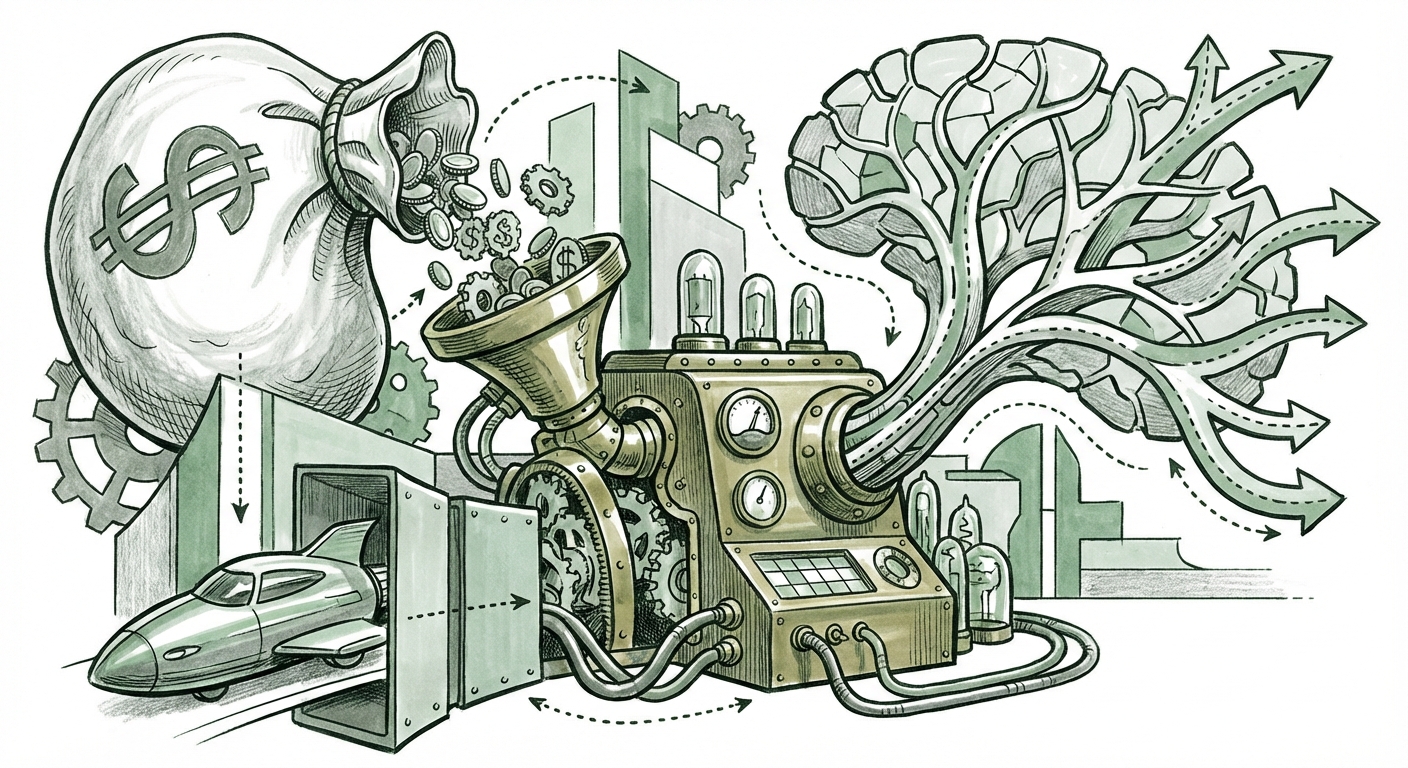
Hugging Face Models on Foundry Managed Compute: The Day Open AI Models Got Enterprise Plumbing
For years, the AI world has lived with an awkward split. On one side, there is a massive, fast-moving library of open models built by the community. On the other side, there are the polished, managed platforms that big companies trust with their production workloads. Getting something from the first world into the second world usually meant weeks of work, a lot of glue code, and at least one person on the team losing sleep over GPU drivers.
That gap just got a lot smaller. Hugging Face models are now available on Foundry Managed Compute. It sounds like a small plumbing update. It is not. It is the moment the open model ecosystem and the managed cloud world started sharing the same hallway, and it changes how AI will be built, bought, and deployed from here on out.
What Actually Happened
The headline is simple: models hosted on Hugging Face can now run on Foundry Managed Compute. Instead of downloading a model, wiring it into your own infrastructure, and building a serving stack around it, you can point at a model and let a managed platform handle the heavy lifting, the GPUs, the scaling, the uptime, the boring-but-critical parts.
Hugging Face is the place where the world's open models live. Foundry Managed Compute is the kind of environment where enterprises expect to run real workloads, with the reliability, access controls, and operational support that come with a managed service. Putting the two together matters because it removes the friction that has kept many companies from using open models at all.
Think of it like this. For years, open models were like a great recipe posted online. Anyone could use it, but you had to buy your own oven, learn to bake, and clean up the mess yourself. Now the recipe comes with a fully stocked, professionally staffed kitchen.
Why the "Open vs. Managed" Wall Was Always Artificial
The AI industry has spent a lot of energy arguing about open versus closed models. That debate is real, but it has hidden a simpler truth: most companies never actually cared about the philosophical question. They cared about three things, does it work, does it cost less, and can I ship it without breaking something.
Closed, fully managed models won a lot of business over the past few years not because they were always better, but because they were easier to put into production. You called an API, you got an answer, you moved on. Open models often performed beautifully in a notebook and then fell apart the moment a team tried to serve them to thousands of real users.
By bringing Hugging Face models onto Foundry Managed Compute, that excuse disappears. The choice is no longer "easy but closed" versus "powerful but painful." It is now a fair fight on the same playing field, and that is a much healthier place for the market to be.
The Bigger Trend: The Model Catalog Becomes the New App Store
Step back and a pattern emerges. Every major platform is racing to become the place where you browse, compare, and deploy AI models the way you once browsed apps. The catalog is becoming the product.
This has a few big consequences:
- Discovery beats development. When thousands of models are one click away, the hard part stops being "can we build it" and becomes "which one should we pick."
- Switching costs fall. If a better model shows up next month, you can try it without re-architecting your entire stack.
- Specialisation wins. Instead of one giant model doing everything, teams can pick small, focused models for specific jobs, and pay for only what they need.
- Platforms become referees. Whoever hosts the catalog also controls the safety checks, the billing, and the rules of the road.
That last point is the one to watch. When a single platform sits between you and the entire open model universe, it holds real power. Convenience and dependence tend to arrive together.
What This Means for the Future of AI
1. Open Models Become the Default, Not the Backup
For a long time, open models were the scrappy underdog, great for hobbyists, research, and cost-conscious startups. Once they run on the same reliable infrastructure as everything else, they become a legitimate first choice for mainstream business workloads. Expect the phrase "we use an open model" to stop sounding like a compromise and start sounding like a strategy.
2. The Middle Layer Gets Crowded and Valuable
Between the raw model and the finished product sits a new middle layer: serving, fine-tuning, evaluation, monitoring, and governance. Managed compute platforms are fighting to own that layer, because that is where the money and the lock-in live. The winners will be the ones that make moving between models easy rather than sticky.
3. Cost Pressure Hits Everyone
When you can run a right-sized open model on managed infrastructure, the economics of running every task through one giant flagship model start to look wasteful. The future is likely a mix, small models for simple jobs, big models for the hard ones, and a platform that routes between them. That kind of routing is exactly what managed compute makes possible.
4. Trust and Safety Shift to the Platform
Open models raise real questions about safety, licensing, and misuse. A managed platform can add a layer of checks that a raw download never had. That is good for responsible deployment, but it also means the platform, not the community, decides what is allowed. Expect ongoing tension here.
Practical Implications for Businesses
If you run a company that is trying to figure out its AI plan, here is what this shift actually changes day to day.
Lower Barriers to Entry
Small and mid-sized teams no longer need a dedicated machine learning operations crew just to get a model into production. That opens AI to companies that were previously priced out of the game.
Faster Experimentation
Testing five models used to be a multi-week project. When they all live in one catalog and share one serving environment, it becomes an afternoon. Faster experiments mean faster learning, and faster learning is the real competitive advantage in AI right now.
Reduced Vendor Lock-In, With a Catch
Open weights mean you are not permanently tied to one provider's model. You can move. But if you build deeply on one platform's tools, you may still be tied to the platform itself. The lesson: keep your data and prompts portable, and treat the platform as a layer you can replace.
New Governance Questions
IT and legal teams need to ask new questions. Which models are approved? Where does the data go? Who is accountable when a model produces a bad answer? A managed catalog makes these questions easier to answer, but only if someone actually asks them.
What It Means for Society and the Wider Ecosystem
Outside the boardroom, the effects are quieter but just as real.
Open models let more people build things, small businesses, researchers, developers in places with less access to big cloud budgets. Making those models easier to run widens that door. More voices building AI means AI that reflects more of the world, not just the priorities of a handful of large labs.
At the same time, convenience concentrates power. If most people access open models through a small number of managed platforms, those platforms become gatekeepers for what is possible. That is not automatically bad, but it deserves attention. Healthy ecosystems need multiple doors, not one.
There is also a skills story here. When infrastructure gets easier, the valuable skill shifts from "can you make it run" to "do you know what to build and why." That is good news for people with domain knowledge and bad news for anyone whose only edge was wrestling with servers.
Actionable Insights: What to Do Now
- Audit your model choices. Look at every AI feature you run. Ask whether a smaller, cheaper, open model could do the job just as well.
- Build a test harness, not a monument. Set up a simple way to swap models in and out. The teams that can change models quickly will keep winning.
- Watch the fine print. Read the licensing and safety rules attached to any model you deploy, especially if you serve customers.
- Keep your data portable. Store prompts, evaluation results, and training data in formats you can carry to another platform tomorrow.
- Decide who owns AI governance. Name a person or team responsible for what models get approved and how they are monitored.
- Plan for a mixed fleet. Assume you will run several models at once, not one. Design your systems for that reality.
The Road Ahead
The story here is not really about a model or a platform. It is about the moment a fragmented, tinkerer-friendly ecosystem met the industrial-grade machinery that real businesses depend on. That meeting changes the pace of everything.
Expect three things to accelerate. First, open models will show up in more serious commercial products. Second, managed platforms will compete harder on how easy they make it to switch, because that becomes the real selling point. Third, the line between "open" and "managed" will blur until almost nobody talks about it anymore, which is exactly what happens when a technology becomes normal.
For businesses, the message is straightforward: the excuse for not using open models just got much weaker. For the wider AI world, the message is more interesting, the future of AI may not be decided by which model is smartest, but by which model is easiest to actually put to work. Today, that race got a lot more competitive.