NVIDIA Cosmos Reason 2: Why Advanced Reasoning Is the Next Big Leap for Physical AI
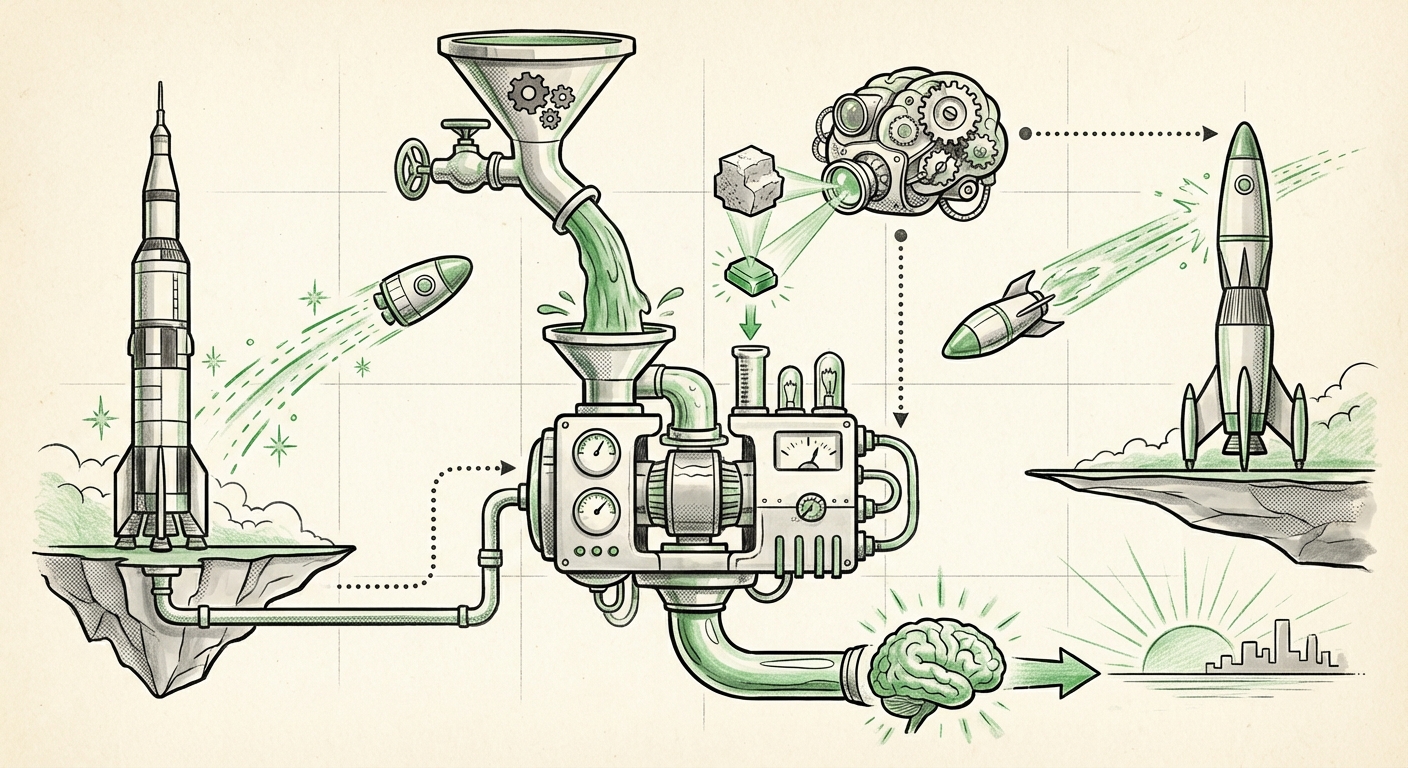
On January 5, 2026, NVIDIA introduced Cosmos Reason 2, a new model designed to bring advanced reasoning capabilities to physical AI. The announcement is more than a product update, it signals a major shift in how machines will understand and interact with the real world. For years, physical AI has focused on perception: teaching robots and autonomous systems to see, detect, and classify objects. Cosmos Reason 2 pushes the field toward something far more powerful: the ability to reason about what is happening, why it matters, and what to do next.
This article explores what advanced reasoning means for physical AI, why it matters for businesses and society, and how companies can prepare for the coming wave of intelligent machines that don't just sense, but think.
From Perception to Reasoning: The Evolution of Physical AI
Physical AI refers to artificial intelligence systems that operate in the physical world, robots, autonomous vehicles, drones, industrial machines, and more. Until recently, most progress in this space came from better sensors and faster perception models. A robot could recognize a cup, a person, or a doorway. But recognizing an object is not the same as understanding a situation.
Consider a warehouse robot. Perception tells it there is a box in front of it. Reasoning tells it that the box is blocking the fastest route, that a human worker is approaching from the left, that the box is light enough to move, and that moving it now will save time without creating a safety risk. That leap, from seeing to deciding, is where advanced reasoning comes in.
NVIDIA's Cosmos Reason 2 is built for exactly this leap. By adding reasoning capabilities to physical AI, it aims to help machines handle ambiguity, plan multi-step actions, and adapt to unexpected situations. This is a fundamental change in what physical AI can do.
What Advanced Reasoning Brings to Machines
Reasoning models have already transformed digital AI. They can break down complex questions, consider multiple possibilities, and explain their conclusions. Now, that same capability is moving into the physical world. For physical AI, advanced reasoning means machines can:
- Understand context: A robot doesn't just see a chair, it understands that the chair is occupied, that the person sitting is eating, and that interrupting could be unsafe or rude.
- Plan ahead: Instead of reacting step by step, a machine can simulate outcomes and choose the best path forward.
- Handle the unexpected: When a conveyor belt jams or a delivery route is blocked, a reasoning-enabled system can diagnose the problem and try alternative solutions.
- Explain decisions: Reasoning models can provide a rationale for their actions, which is critical for safety, trust, and regulatory compliance.
These capabilities are not just incremental improvements. They change the kinds of tasks machines can be trusted to perform. A robot that can reason is a robot that can be given broader goals, like "restock the shelves efficiently" or "deliver this package safely", rather than narrow, pre-programmed commands.
Why This Matters for Business and Industry
The move toward reasoning-enabled physical AI has significant implications across industries. Here are some of the most important ones:
1. More Flexible Automation
Traditional industrial robots excel at repetitive tasks in controlled environments. Reasoning-enabled robots can handle variability, different object shapes, changing layouts, unexpected obstacles. This makes automation viable for smaller businesses and more complex tasks, from custom manufacturing to unstructured warehouse environments.
2. Safer Human-Robot Collaboration
Reasoning allows machines to understand human intent and social context. A robot that can reason about a person's likely next move is safer to work alongside. This could accelerate the adoption of collaborative robots in healthcare, logistics, and even home settings.
3. Faster Response to Edge Cases
In logistics, agriculture, and field services, edge cases are the norm. A reasoning-enabled drone can decide how to inspect a damaged power line when the usual flight path is blocked. A reasoning-enabled tractor can adjust to unexpected soil conditions. These systems reduce the need for human intervention and keep operations running.
4. New Business Models
When machines can reason, they can be entrusted with higher-level goals. This opens the door to robotics-as-a-service, where customers specify outcomes rather than tasks. It also enables continuous learning and improvement across fleets, as reasoning models can share insights about unusual situations.
The Road Ahead: Challenges and Opportunities
Advanced reasoning in physical AI is not without challenges. Reasoning models are more compute-intensive than perception models, which raises questions about power, latency, and cost. For a robot operating on a battery, every watt matters. NVIDIA's focus on this area suggests that hardware and software co-design will be critical.
Safety and validation are also major concerns. A reasoning model can make mistakes in ways that are harder to predict than a simple perception error. Ensuring that reasoning-enabled machines behave safely in edge cases requires new testing methods and perhaps new regulatory frameworks. The ability to explain decisions, a core strength of reasoning models, will be essential for certification.
Finally, there is the question of trust. People need to feel comfortable with machines that make judgment calls. Transparency, predictability, and clear boundaries will determine how quickly reasoning-enabled physical AI is adopted in public spaces and homes.
Actionable Insights: How to Prepare
For business leaders and technologists, the arrival of Cosmos Reason 2 is a signal to start planning. Here are practical steps:
- Identify reasoning-heavy use cases. Look for tasks where machines currently fail due to ambiguity, variability, or the need for multi-step planning. These are the best candidates for reasoning-enabled physical AI.
- Invest in simulation and testing. Reasoning models need rich, diverse training data and robust simulation environments. Building these capabilities now will pay off as reasoning-enabled robots become available.
- Plan for compute and infrastructure. Reasoning requires more powerful edge hardware. Budget for upgrades and consider hybrid architectures where heavy reasoning happens in the cloud or on-premise.
- Focus on safety and explainability. Choose systems that can explain their reasoning and provide clear audit trails. This will be essential for compliance and user trust.
- Start small, learn fast. Pilot reasoning-enabled physical AI in controlled environments, a single warehouse aisle, a specific inspection task, and iterate based on real-world performance.
Conclusion: The Thinking Machine Era Begins
NVIDIA's Cosmos Reason 2 marks a turning point. Physical AI is moving from machines that sense to machines that think. This shift will not happen overnight, but its impact will be profound. Just as reasoning models transformed digital assistants and chatbots, reasoning-enabled physical AI will transform how robots work in factories, warehouses, farms, hospitals, and homes.
The companies that embrace this change early, by identifying the right use cases, investing in simulation, and prioritizing safety, will be the ones that lead the next wave of automation. The age of the thinking machine has begun. The question is not whether physical AI will become smarter, but who will be ready when it does.