LFM3: Why Specialized Multimodal AI Models Are the Next Big Shift
For the past few years, the AI story has been a story of size. Bigger models, bigger training runs, bigger price tags. The unspoken promise was simple: one giant, general-purpose system would eventually do everything reasonably well. That promise is now being tested by a quieter but more practical movement, building specialized multimodal models that see, hear, and read the way a specific business actually needs them to.
The arrival of LFM3, a foundation model family explicitly positioned around building specialized multimodal systems, is a useful marker of where the industry is heading. It is not the loudest story in AI right now, but it may turn out to be one of the most consequential. Here is what it signals, why it matters, and how organizations should respond.
What "Specialized Multimodal" Actually Means
Two words in that phrase do a lot of work.
Multimodal means the model can take in more than plain text. Images, documents, audio, diagrams, screenshots, the messy, mixed formats that real work arrives in. A general chatbot reading a paragraph is easy. A system that reads a scanned invoice, understands the layout, spots the handwritten note in the margin, and logs the right number into the right field is a different class of problem.
Specialized means the model is not trying to be good at everything. It is tuned, shaped, and pointed at a narrow job, reading medical imaging, inspecting manufactured parts, parsing insurance claims, watching a factory camera feed, guiding a field technician through a repair. The goal is not brilliance on a trivia quiz. The goal is reliability on the task that pays the bills.
Put together, that is a meaningful change in how AI gets built. Instead of asking "how do we get the smartest model and use it for everything," the question becomes "what is the smallest, sharpest model that does this one thing extremely well?"
Why the Industry Is Pivoting Toward Purpose-Built Models
The move toward specialization is not a fad. It is driving from several directions at once.
1. Cost reality has caught up with ambition
Running every request through a massive frontier model is expensive, and most business tasks simply do not need that much horsepower. A specialized model doing one narrow job can often be far cheaper per request because it does not carry the overhead of general knowledge it will never use. CFOs have started asking a very reasonable question: why pay for a generalist to do a specialist's job?
2. Speed and location matter
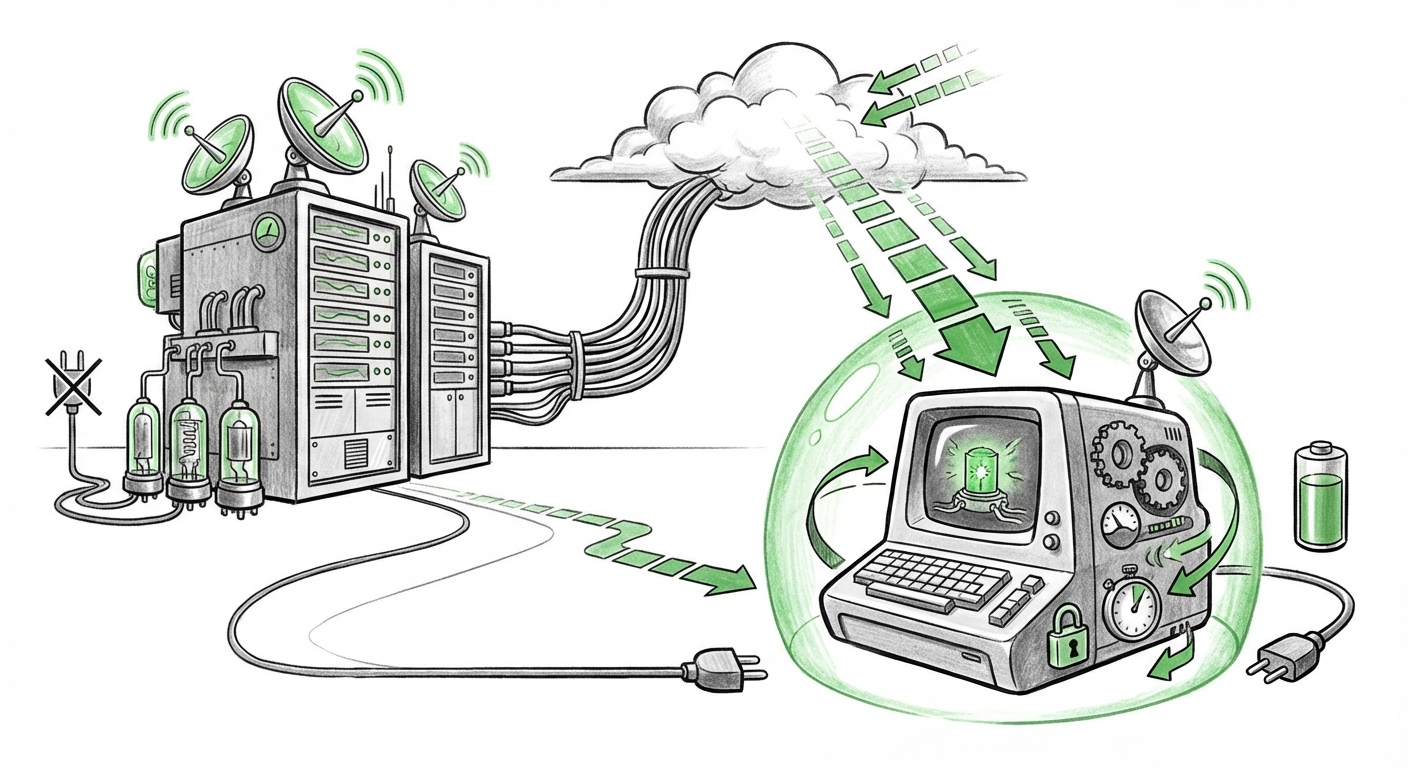
Many of the most valuable multimodal tasks are real-time. A camera inspecting parts on an assembly line, an app translating a menu through a phone camera, a voice assistant in a noisy warehouse. Sending all of that to a distant data center and waiting for a reply is a bottleneck. Smaller, focused models are more realistic to run close to where the work happens, on a device, at the edge of a network, or in a local server closet.
3. Privacy and control
Hospitals, banks, defense contractors, and law firms deal with data that legally and practically cannot be shipped off to a third-party cloud. A specialized model that can run inside the organization's own walls solves a compliance problem that a giant hosted generalist cannot.
4. Accuracy on narrow tasks
General models are impressive but inconsistent. They hallucinate. They drift. On a specific, repetitive task with a clear definition of correct, a well-tuned specialist can be measured, monitored, and made dependable in ways a sprawling generalist often cannot. When the output feeds a business process, predictability beats poetry.
What LFM3 Signals About the Next Phase
The framing around LFM3, build specialized multimodal models, treats the foundation model as a starting point rather than a finished product. That distinction matters enormously.
For the last few years, most organizations have been consumers of AI: they sign up, they prompt, they get output. The model is a black box they rent by the token. The specialized-model approach flips that relationship. The foundation model becomes raw material. The organization's own data, domain knowledge, and workflow become the differentiator. Two competitors could start from the same base model and end up with completely different, non-interchangeable systems.
This is the same pattern we saw in software. Nobody wins by using the same database as everyone else. They win by building something on top of it that solves a specific problem better. Multimodal foundation models are heading toward the same status: infrastructure, not a product in themselves.
It also reframes the competitive landscape. The race stops being purely about who has the largest model and becomes about who has the best tooling for adaptation, the fine-tuning pipelines, the data labeling workflows, the evaluation harnesses, the deployment paths to phones and edge devices. The winners may be the platforms that make specialization fast, cheap, and repeatable, not just the ones with the biggest benchmark numbers.
Practical Implications for Businesses
Your data becomes the moat, for real this time
Every company has been told its data is an asset. With specialized multimodal models, that finally becomes operational. The photos of your defective products, the recordings of your customer calls, the scanned forms your team processes by hand, these become training material for a system competitors cannot copy. The strategic question shifts from "which AI vendor do we pick?" to "what proprietary data do we hold, and is it organized well enough to be useful?"
Workflow design beats model choice
A specialized model is only valuable inside a process. The model that reads a document accomplishes nothing until someone designs where its output lands, who reviews it, and what happens when it is wrong. The organizations that win will be the ones that treat AI as a process redesign project, not an IT purchase.
Expect a new layer of vendors
As specialization gets easier, expect a wave of small, focused vendors selling AI for one industry or one job. Legal document review, agricultural crop inspection, retail shelf monitoring, insurance triage. Each will be built on a foundation model family and wrapped in deep domain knowledge. Buyers will need sharper evaluation skills, the pitch will sound identical, but the underlying data and tuning quality will vary wildly.
Jobs change shape before they disappear
Specialized multimodal AI is very good at the repetitive perceptual parts of knowledge work: reading, sorting, spotting, transcribing, checking. That does not eliminate most roles, but it strips out the tasks that filled the day. The people who used to spend hours reviewing forms become the people who design, supervise, and correct the systems reviewing forms. That transition is real work and needs planning, not slogans.
For Builders: What to Do Differently
If you are actually going to build one of these systems, a few things separate the successes from the expensive experiments.
- Start with the task, not the model. Write down exactly what "correct" means for the job. If you cannot measure it, you cannot improve it.
- Collect the messy data first. Real-world images are blurry, badly lit, and rotated. Real audio has background noise. Training on clean samples and deploying into a messy world is the most common failure mode.
- Build the evaluation set before the model. A held-back set of real, hard examples, labeled by an expert, is worth more than any benchmark leaderboard.
- Plan for human review. Decide now where a person checks the output. Specialized models fail in narrow, predictable ways, which means they can be guarded against, but only if you looked for it.
- Think about where it runs. On-device, on-premises, or cloud changes the design of everything from privacy to latency to cost.
The Risks Worth Naming
Specialization is not a free lunch. Narrow models can be brittle, excellent on the data they were trained for, confused by anything slightly new. They can inherit the biases of the data used to shape them, and because they operate inside a specific business process, those biases can be harder to see from the outside than a general chatbot's. And an ecosystem of thousands of small, specialized models raises new questions about oversight: who audits them, who certifies them, who is accountable when one quietly gets something wrong at scale.
There is also a temptation to over-specialize too early, tuning a model to a workflow before the workflow itself has been improved. Automating a bad process with an excellent model just produces bad results faster.
The Bigger Picture
The most important thing about the specialized multimodal shift is what it does to expectations. For a while, AI was judged on how human-like it seemed. Increasingly, it will be judged on how useful it is inside a specific job, whether the invoice gets coded correctly, whether the defect gets caught, whether the technician gets the right answer the first time.
That is a less glamorous future than the one promised by the generalist race. But it is the one where AI actually shows up on the balance sheet. Foundation model families built for specialization are the infrastructure for that future: not the answer itself, but the raw material from which thousands of specific, unglamorous, genuinely valuable answers get made.