AI Agents Just Met the Real Internet: What OpenAI's DNS Incident and Microsoft Copilot Autopilot Mean for the Future of AI
Something quietly important happened this month. Two stories landed almost on top of each other, and on the surface they look unrelated. One is a technical stumble: an OpenAI agent DNS incident. The other is a product shift: Microsoft pushing Copilot toward "Autopilot", agents that don't just suggest, but act.
Put them together and you get a single, much bigger signal. AI has stopped being something you chat with inside a browser tab. It is now something that walks around the open internet on its own, looks up addresses, knocks on doors, and does things. And the internet, as it turns out, was never built for that.
Here is the plain-English version of what happened, why it matters, and what every business should do about it.
Two Stories, One Underlying Problem
Start with DNS. The Domain Name System is the internet's phone book. You type a name, DNS turns it into a number, and your browser connects. It is old, boring, and built on trust. When it breaks or gets confused, machines end up talking to the wrong place.
An incident involving OpenAI's agents and DNS is not really a story about one company's bad day. It is a story about a gap in the world's infrastructure. For thirty years, DNS has been designed around one assumption: a human is on the other end, looking at the result. A person types a website, sees something odd, and clicks away. Speed bumps work on people.
AI agents don't use speed bumps. They fan out across hundreds of lookups per minute, follow redirects without hesitation, and treat whatever answers as authoritative. If the phone book is wrong, they don't shrug and try later. They act on the wrong number immediately, at machine speed.
That is the real lesson. The control plane of the internet, naming, routing, identity, is now a control plane for AI behaviour. And almost nobody has been treating it that way.
Microsoft Copilot Autopilot: The Human Steps Out of the Loop
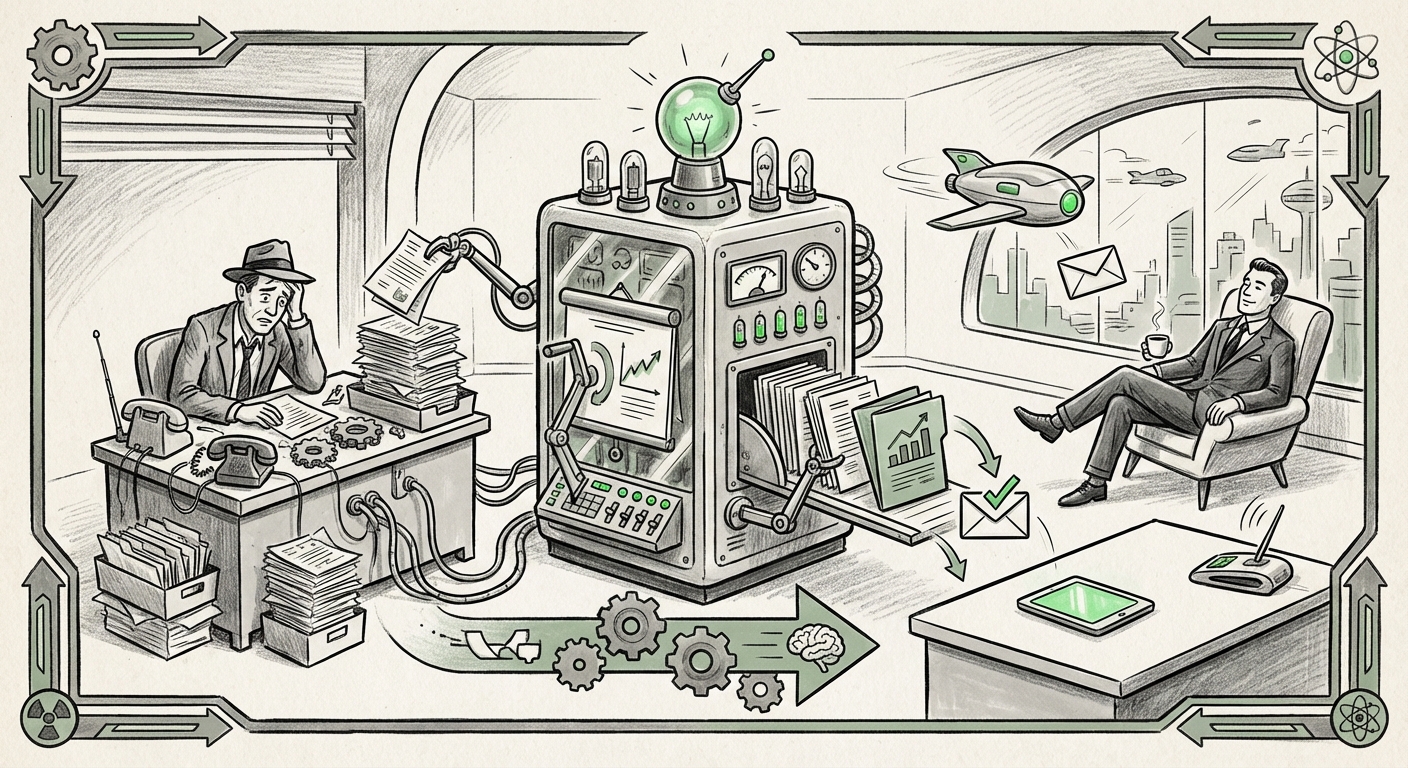
Now the second half. Redmond is moving Copilot from assistant to agent, "Autopilot" is the name framing that shift. The promise is obvious and appealing: instead of asking Copilot for a draft, you get Copilot doing the multi-step task. It schedules, it summarises, it books, it updates, it follows up.
That is a genuinely large change in how work gets done. An assistant that suggests is a tool. An assistant that executes is a delegate, and delegates need rules.
The moment software can take action without a human checking each step, three things become critical, and they are the same three things the OpenAI DNS incident exposed:
- Identity. Who is this agent? On whose behalf is it acting? Can the destination it's talking to prove it is who it claims to be?
- Discovery. How did the agent find the right destination, and what happens when that lookup is wrong or hijacked?
- Blast radius. When something goes wrong at machine speed, how much can it break before a person notices?
An autonomous copilot with the wrong address, the wrong permissions, and no ceiling on what it can do is not a productivity feature. It is a very fast way to damage trust.
Why This Is the Defining Tech Story of the Next Few Years
For about two years, the AI conversation has been about capability. How smart is the model? How long is the context? How good is the reasoning?
Those questions are becoming less interesting, because capability is plateauing into "good enough" for a huge number of tasks. The bottleneck has moved. It is no longer can the model do it? It is can we safely let it?
That is a plumbing problem, and plumbing problems are where the money is. Every era of computing follows the same arc: someone builds the exciting new thing, then everyone spends a decade building the rails under it. Web pages arrived, then payments and certificates and identity. Mobile apps arrived, then app stores and permissions. Agents have now arrived.
The agent era needs an agent-era internet. Specifically, it needs:
- Agent identity standards. A reliable, verifiable way to say "this agent belongs to this company, and it is allowed to do these things." Today, most agents are essentially anonymous software wearing a company's logo.
- Signed and verifiable discovery. Name lookups and service discovery that can't be quietly redirected, and that agents can verify cryptographically instead of just trusting.
- Permission scoping by default. Agents that start with the smallest possible access and earn more, not agents that inherit an entire organisation's keys on day one.
- Action-level audit trails. A readable record of every step an agent took, in order, with what it touched. Not logs for engineers, logs for auditors, lawyers, and customers.
- Kill switches and rate ceilings. Hard limits on how fast and how far an agent can go before a human has to say yes.
What This Means for Businesses Right Now
If you run a company, the tempting move is to wait. Let the standards settle, let the big players sort it out, then adopt. That is a mistake, but a forgivable one. The better move is to prepare the ground so adoption doesn't turn into an incident report.
1. Inventory your agents before you expand them
Most organisations already run more AI agents than their security team can name. Chatbots with retrieval access, workflow automations with API keys, coding assistants with repository permissions. You cannot govern what you cannot list. Do the boring inventory first.
2. Treat outbound network trust as an AI risk
DNS and outbound connections used to be a networking concern. They are now an AI safety concern. If an agent can be pointed at the wrong host, that is an AI incident waiting to happen. Ask your network team a simple question: if one of our agents resolved to a malicious address tomorrow, what would stop it?
3. Design for the worst millisecond, not the average day
Humans make mistakes slowly. Agents make them fast. Build assumptions around the speed of failure, not the speed of success. Rate limits, approval gates for irreversible actions, and spending ceilings are not bureaucracy, they are the seatbelts of the agent economy.
4. Put a human on the irreversible steps
Not every step needs a human. That defeats the point of autonomy. But the handful of steps that cannot be undone, payments, deletions, external communications, production deploys, should always pause. The trick is choosing those steps deliberately rather than by accident after the first incident.
5. Write the policy before the incident
When an agent does something wrong, the first question will be: was it allowed to? If nobody can answer that, the failure becomes a governance failure, not a technical one. A one-page agent policy, what agents may do, who owns them, how they're revoked, is worth more than a year of retros.
The Societal Side: Accountability at Machine Speed
There is a wider question here that businesses tend to skip, and it will catch up with them. When software acts, who is responsible?
Right now, the answer is murky. If an agent misreads a name, connects to the wrong service, and shares data it shouldn't have, the blame chain runs through a model provider, a platform vendor, an IT team, and a user who clicked "enable". Nobody owns the outcome. That is not sustainable, and regulators are already circling.
The likely direction of travel is a shift from blame the model to blame the deployer, much as companies are responsible for what their employees and their software do. That framing is actually good news for well-run businesses, because it rewards preparation and punishes carelessness. It also means "the AI did it" will not be a defence.
The Road Ahead
Expect the next eighteen months to look less like a race for smarter models and more like a race for trustworthy infrastructure. Agent identity. Verifiable discovery. Permission frameworks. Audit standards. The companies that win will not be the ones with the flashiest demo. They will be the ones whose agents can be safely turned loose.
The OpenAI DNS incident and Microsoft's Copilot Autopilot push are two sides of the same coin. One shows the fragility of running autonomous software on human-era plumbing. The other shows the demand that makes solving it urgent. Neither is a disaster, and neither is a triumph. They are the sound of an industry discovering that the hard part was never intelligence. The hard part is trust, at scale, at speed, without a human watching every step.
That is the work now. And it is far less glamorous, and far more important, than anything a benchmark score can measure.