OpenFold3 on Amazon SageMaker JumpStart: The Open Biomolecular Structure Prediction Shift
Figuring out the exact 3D shape of a protein or a drug molecule used to be slow, expensive lab work. It could take months or years for a single target. That bottleneck is now being squeezed by AI models that predict biomolecular structures directly from sequence and chemistry data. And as of November 13, 2026, one of the most important open models in this space, OpenFold3, is available on Amazon SageMaker JumpStart.
That sounds like a small product update. It isn't. It marks a bigger shift: open science models are moving out of research notebooks and into the same managed cloud tooling that companies already use for everyday machine learning. In plain terms, structure prediction is becoming a standard piece of enterprise infrastructure rather than a specialist research project.
Here is what happened, why it matters, and how businesses should think about using it.
What Just Happened: OpenFold3 Lands on SageMaker JumpStart
OpenFold3 is an open model built to predict biomolecular structures, the three-dimensional shapes that proteins, nucleic acids, and small molecules fold into, and how they fit together. Shape drives function. If you know the shape, you can start to reason about what a molecule does, how it interacts with a drug, or why a mutation breaks a biological process.
SageMaker JumpStart is Amazon's hub of ready-to-use models and templates inside Amazon SageMaker. Putting OpenFold3 there means teams can find it, deploy it, and start running predictions without hand-building the underlying machine learning environment.
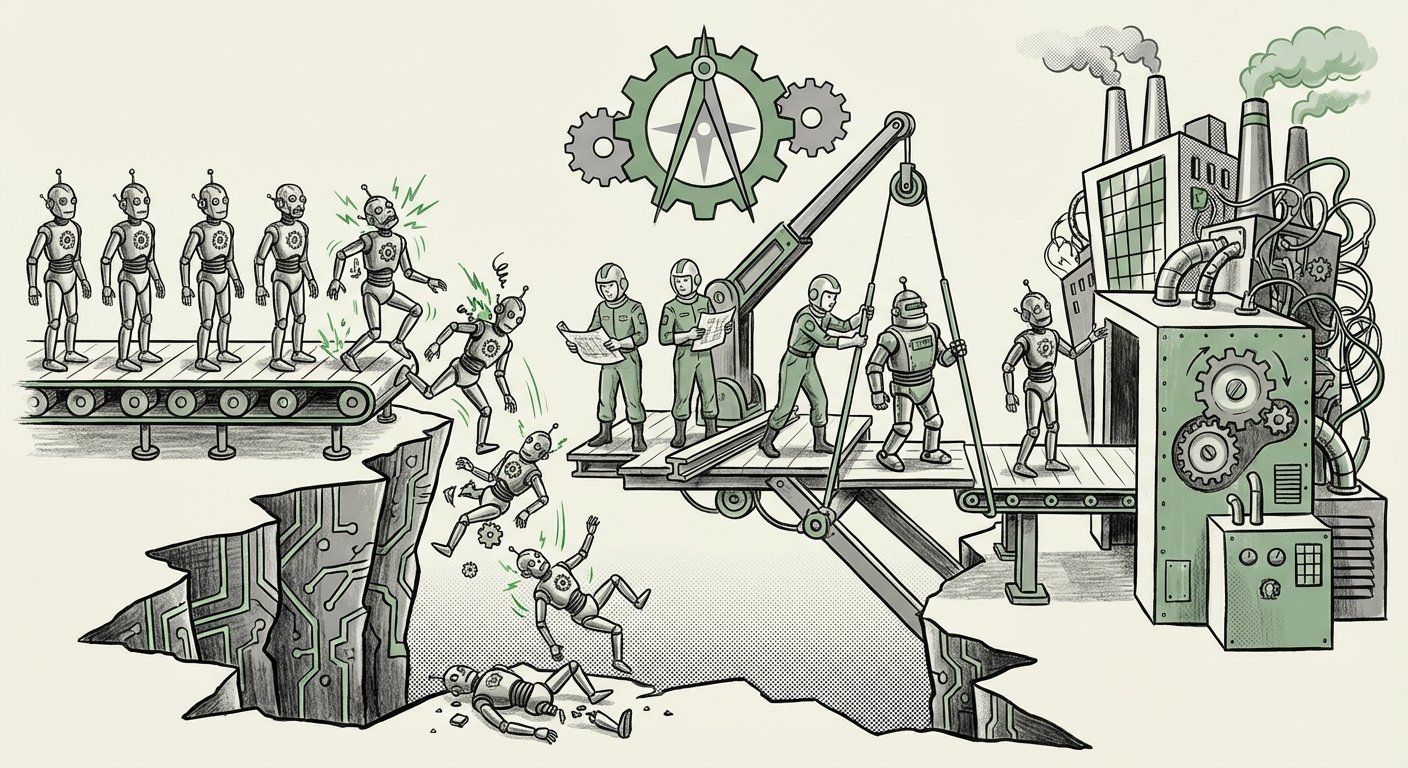
That combination, a powerful open model plus a managed deployment path, removes two of the biggest barriers in scientific AI: setup pain and access. You no longer need a deep learning engineering team just to get a first prediction out the door.
Why Molecular Shape Is Such a Big Deal
Biology is a shape-matching game. Enzymes grab molecules because their surfaces fit. Antibodies neutralize viruses because they lock onto a specific patch of a viral protein. Drugs work, or fail, because of how well they bind to a target.
Historically, getting those shapes meant X-ray crystallography, cryo-electron microscopy, or nuclear magnetic resonance. These methods are powerful, but they are slow, costly, and not every molecule cooperates. Many structures simply could not be solved at all.
Structure prediction models flip the economics. Instead of measuring one structure at a time in a lab, you compute many candidate structures quickly and then spend lab time testing only the most promising ones. That changes the shape of research budgets: less money on brute-force screening, more on validating smart guesses.
When that capability is open and deployable on mainstream cloud infrastructure, it stops being a competitive advantage for a handful of well-funded labs. It becomes a baseline tool.
What JumpStart Adds: From Notebook to Production
A model on a research paper is not the same as a model in a workflow. JumpStart closes that gap in a few practical ways:
- Faster first run. Teams can deploy OpenFold3 without assembling dependencies, container images, or GPU environments by hand.
- Familiar cloud plumbing. Predictions can connect to existing storage, identity, logging, and security controls that enterprises already trust.
- Repeatable pipelines. Structure prediction can be chained into larger workflows, screening libraries, annotating datasets, or feeding downstream analysis.
- Lower skill floor. Data scientists and bioinformaticians can test ideas without waiting on specialized ML engineers.
The deeper point: JumpStart turns a scientific model into a service. Services get used every day. Papers get cited and forgotten.
Three Trends This Signals for the Future of AI
1. Open models are becoming the default in scientific AI
Open weights and open code let researchers inspect, adapt, and validate a model instead of treating it as a black box. In science, that matters more than in consumer apps. If you cannot see how a prediction was made, you cannot easily trust it in a regulated process or build on it in a publication.
OpenFold3 on a mainstream cloud hub is a signal that openness is not a niche ideal. It is a distribution strategy. Open models spread faster because anyone can try them, and cloud hubs make trying them nearly free of setup cost.
2. Model hubs are becoming the app stores of AI
Very few companies want to train a foundation model. Most want to rent one, plug it in, and get results. Model marketplaces and hubs, where you browse, deploy, and pay for what you use, are becoming the primary way AI reaches businesses.
This mirrors what mobile app stores did for software. Discovery, trust, and one-click deployment beat raw capability. The winners will be the platforms that make the boring parts invisible.
3. AI for science is entering the enterprise stack
For years, AI in biology lived in academic labs and a few elite biotech firms. Now it is arriving through the same cloud consoles that run marketing analytics and fraud detection. That is how a technology becomes normal.
Expect more of this. Climate modeling, materials discovery, chemistry simulation, and genomics will follow the same path: open model, managed deployment, mainstream adoption.
What This Means for Businesses
Biotech and pharma
The clearest winners. Structure prediction supports target identification, antibody design, and virtual screening. A managed OpenFold3 endpoint can serve as a shared internal service, so medicinal chemists and computational biologists work from the same predictions instead of duplicating pipelines.
Agriculture, food, and chemicals
Enzyme engineering is quietly one of the highest-value applications. Better enzymes mean more efficient detergents, biofuels, food processing, and crop traits. Being able to predict and redesign enzyme structures quickly shortens development cycles materially.
Software and services vendors
Companies building lab software, electronic lab notebooks, or research platforms can now embed structure prediction as a feature rather than a partnership. That raises the baseline for what customers expect from scientific software.
Talent and cost
The scarce resource shifts. Fewer hours go into infrastructure and setup; more go into framing good questions, curating data, and interpreting results. That is good news for smaller teams with strong domain knowledge and limited engineering depth.
A Practical Playbook for Getting Started
- Start with a narrow question. Pick one protein family or one screening task. Prove value before scaling.
- Build a benchmark set. Where you already have known structures, compare predictions against them. Never adopt a model you have not measured on your own data.
- Treat predictions as hypotheses. Rank and prioritize; do not treat a predicted structure as a confirmed fact.
- Design the handoff to the lab. The value comes from what you test next, not from the file you generate.
- Plan for governance from day one. Log model versions, inputs, and outputs so results are reproducible and auditable.
- Watch the cost curve. Structure prediction at scale is compute-heavy. Batch jobs, caching, and prioritizing targets keep spend sane.
Limits, Risks, and Honest Caveats
Prediction is not measurement. Models can be confidently wrong, especially for unusual molecules, flexible regions, or states that depend on cellular context. Many biological questions depend on dynamics and environment, not just a single static shape. A predicted structure is a strong starting point, not a finished answer.
There is also the risk of false comfort. When a model produces a clean, plausible-looking structure in seconds, teams may skip validation they would otherwise insist on. The organizations that succeed will pair fast prediction with disciplined experimental checks.
Finally, openness cuts both ways. Widely available structure prediction is a huge public good for medicine and research, and it also lowers barriers for anyone modeling harmful biological agents. Responsible use, access controls where appropriate, and clear norms will matter as much as raw capability.
The Road Ahead
The direction of travel is clear. Structure prediction is becoming a standard step in scientific workflows, and open models on managed cloud platforms are the delivery mechanism. In a few years, asking a team how they predict molecular structures will feel like asking how they store data, the answer will mostly be "with the platform we already use."
The real change is not that a model can fold a protein. It is that the capability is now boring, accessible, and cheap to try. That is exactly when technology starts reshaping an industry, not when it is impressive, but when it stops being impressive and starts being assumed.
Conclusion
OpenFold3 arriving on Amazon SageMaker JumpStart is a small line in a product update and a large signal about where AI is headed. Open scientific models are pairing with managed cloud deployment to move research-grade tools into everyday business workflows. For life sciences, agriculture, chemicals, and software vendors, the practical takeaway is simple: the barrier to trying structure prediction just dropped sharply. The teams that experiment now, carefully, with benchmarks and validation, will build the institutional knowledge that later becomes hard to catch up with.