Scientists Are Using ChatGPT: What It Means for the Future of AI and Research
Science has a new assistant. It doesn’t wear a lab coat. It doesn’t hold a pipette. It’s a chatbot. Scientists are using ChatGPT in their daily work, and that simple shift is a big signal about where artificial intelligence is heading. The chatbot is no longer just a novelty for writing emails or telling jokes. It is becoming part of the scientific process itself, from the first spark of an idea to the final draft of a paper.
This matters far beyond the lab. When scientists, people trained to question everything, start using a tool, the rest of us should pay attention. Their habits often predict what will become normal in business, education, and government. The question is no longer whether AI will change how we work. The question is how fast, and who will benefit.
The New Lab Assistant: How Scientists Are Putting ChatGPT to Work
The pattern is clear. Scientists are not treating ChatGPT like a magic answer machine. They are weaving it into the messy, human parts of research. They use it to brainstorm questions, summarize background reading, clean up code, and turn rough notes into readable drafts. They use it to translate dense papers into plain language. They use it to plan experiments and spot gaps in their own thinking.
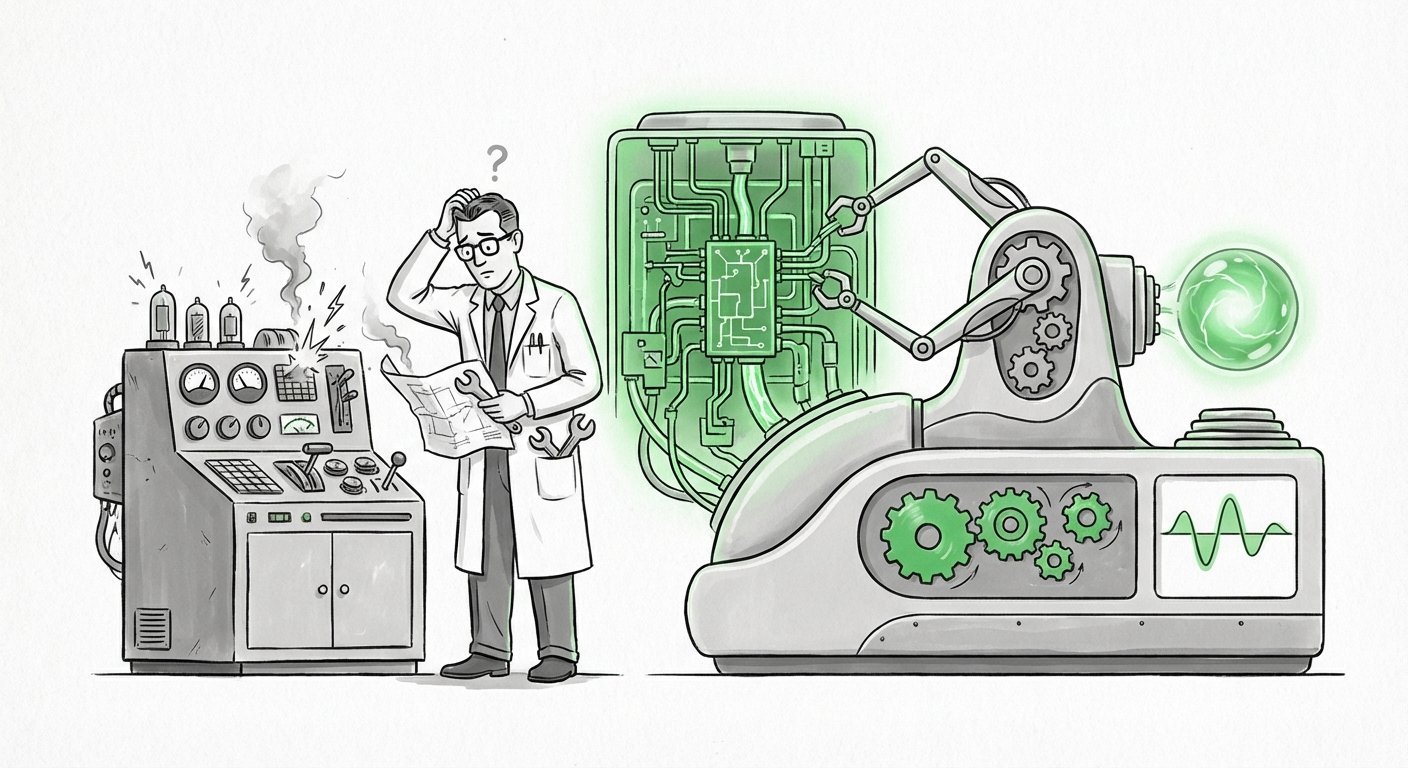
Think of it like a tireless research assistant who has read a lot but sometimes gets confused. That assistant can save hours of busywork. It can help a scientist move faster through the early, foggy stages of a project. But it still needs a human boss who checks the facts and makes the final call.
That is the key trend. AI is moving from the edges of science to the core. It is becoming less like a calculator and more like a collaborator. Scientists are learning that the tool is most useful when they treat it as a partner for thinking, not a replacement for thinking.
Why This Matters: AI Moves from Novelty to Necessity
Every major technology follows a similar path. First it is strange. Then it is optional. Then it is expected. ChatGPT is moving through that curve in science right now. Early users were curious. Now the tool is becoming part of the daily workflow. That shift is important because science is a leading indicator for the rest of society.
When scientists adopt a tool, they bring a special kind of pressure. They need accuracy. They need reproducibility. They need to show their work. So their use of ChatGPT is a stress test for AI. If the tool can survive in science, it can survive almost anywhere. If it fails, the failures will be visible and instructive.
This is already shaping the future of AI. The next wave of AI tools will be judged not by how impressive they sound, but by how reliably they support real work. Scientists are demanding better citations, better reasoning, and better ways to check answers. That demand will push AI companies to build systems that are more transparent, more careful, and more useful for high-stakes tasks.
The trend also changes what it means to be a scientist. The job will not disappear. But the mix of skills will shift. Less time on repetitive tasks. More time on judgment, creativity, and verification. The scientists who thrive will be the ones who learn to ask better questions and check answers faster.
The Future of AI in Science: From Assistant to Collaborator
The next stage is already visible. AI is moving from a chat window to a set of embedded tools. Imagine an AI that reads a stack of papers, highlights contradictions, suggests experiments, and drafts a methods section, all while keeping a clear trail of where its ideas came from. That is the direction of travel.
We will see more specialized AI systems for science. Some will focus on chemistry. Some will focus on biology. Some will focus on data analysis. These tools will not be general chatbots. They will be trained on scientific knowledge and built with guardrails for scientific work. They will connect to lab equipment, databases, and writing tools. They will become part of the research infrastructure.
But the future is not automatic. The biggest barrier is trust. Scientists need to know when an AI answer is solid and when it is a guess. They need ways to trace claims back to sources. They need standards for disclosure, so readers know when AI helped write a paper or analyze data. Without those guardrails, the tool will create more noise than knowledge.
The most likely future is not AI replacing scientists. It is AI changing the shape of scientific work. The scientist becomes a director of a small team of AI helpers. The human sets the goal, checks the logic, and takes responsibility. The AI handles the repetitive work. That is a future worth building.
Practical Implications for Businesses and Society
Businesses can learn a lot from what is happening in science. Scientists are using ChatGPT in a careful, check-heavy way. They do not trust it blindly. They test it. They compare it to other sources. They keep a human in the loop. That is a model for any company that wants to use AI without getting burned.
The first implication is speed. Teams that use AI for drafting, summarizing, and coding can move faster. But speed without accuracy is a trap. The second implication is skills. Workers will need to learn how to prompt, review, and correct AI output. That is a new kind of literacy. It should be taught in schools and in workplaces.
The third implication is access. If AI tools become essential for research and business, then unequal access becomes a bigger problem. Small labs, poorer schools, and smaller companies could fall behind. Society will need to think about how to spread the benefits. That means affordable tools, open standards, and training programs.
The fourth implication is trust. People will want to know when AI is used. They will want to know who is responsible when something goes wrong. Scientists are already wrestling with these questions. Businesses and governments will face them soon. The answer cannot be to ban the tool. The answer is to build clear rules and good habits.
Actionable Insights: How to Prepare for AI-Powered Science
Whether you run a lab, a business, or a classroom, the rise of ChatGPT in science offers practical lessons. Here is what you can do now.
- Start with low-stakes tasks. Use AI for brainstorming, summarizing, and drafting. Build confidence before you trust it with critical decisions.
- Create a verification habit. Never accept an AI answer without a check. Ask for sources. Compare with trusted references. Make review a normal step, not an afterthought.
- Train your team on AI literacy. Teach people how to write good prompts, spot hallucinations, and use AI responsibly. This is a skill, not a secret talent.
- Be transparent about AI use. Decide when and how you will disclose AI help. Transparency builds trust and protects your reputation.
- Focus on data quality. AI is only as good as the information it works with. Clean, well-organized data makes every AI tool more useful.
- Keep humans in charge. Use AI to support judgment, not replace it. The final call should always belong to a person who understands the context.
These steps are simple, but they are not easy. They require discipline. The scientists who are already using ChatGPT are learning that discipline in real time. The rest of us can follow their lead.
The Road Ahead: Guardrails, Trust, and Human Judgment
The use of ChatGPT in science is a preview of the future. It shows that AI can be a powerful helper when it is used with care. It also shows the risks. A wrong answer can waste time. A fake citation can damage a career. A hidden bias can skew a result. These are not reasons to stop. They are reasons to build better systems and better habits.
The next few years will bring more rules, more tools, and more debate. We will see new standards for AI in research. We will see journals and funders ask for disclosure. We will see AI systems that can explain their reasoning and show their sources. We will see a generation of scientists who grew up with these tools and use them naturally.
The big lesson is that AI does not replace human judgment. It raises the stakes for human judgment. Scientists are using ChatGPT not because they want to automate science, but because they want to spend more time on the parts that matter. That is the future of AI in every field: less busywork, more thinking. The organizations that get this right will be the ones that pair powerful tools with strong human oversight.
Science at the frontier has always been about asking better questions. ChatGPT is now part of that quest. The tool is not the hero. The scientist is. But the scientist with a good AI assistant will have an edge. That is what the future of AI looks like, not a robot takeover, but a quiet shift in how work gets done.