Liquid AI's d1.2 and d1.2-ultra Top the AA Decision Index: Why Omnimodal Decision Models Are AI's Next Big Shift
Most AI news still centers on chatbots that write emails, answer questions, or summarize documents. Liquid AI just pushed the conversation in a different direction. The company released d1.2 and d1.2-ultra, two omnimodal decision models, and they top the AA Decision Index.
That combination is the real story. It is not just another model launch. It is a signal that AI is moving from generating answers to making choices. The companies that understand this shift early will be better prepared to use AI where it matters most: inside real workflows, with real data, and with real consequences.
What Liquid AI Released, and Why the Names Matter
Liquid AI has released two models: d1.2 and d1.2-ultra. Both are described as omnimodal decision models. Both are positioned at the top of the AA Decision Index. Those are the key facts, and they carry more weight than they might seem to at first glance.
The word omnimodal is important. In simple terms, a modal AI model works with one kind of input, such as text. An omnimodal model is built to work with more than one kind of input. That could include text, images, audio, structured records, and other data streams. The exact mix depends on the model, but the direction is clear: AI is being asked to handle the messy, mixed-data reality of business operations.
The word decision is even more important. A chat model produces a response. A decision model produces a choice. It might rank options, route a request, recommend an action, or flag a case for review. In business terms, that is a very different product. It is also a much harder problem.
Chat models can be judged on whether their answers sound right. Decision models must be judged on whether their choices lead to good outcomes. That is why the AA Decision Index matters. It moves the scoreboard away from language quality and toward decision quality.
The AA Decision Index Changes the Scoreboard
For years, AI leaderboards have mostly measured language ability. They test reading, writing, reasoning with text, and answering questions. Those tests are useful, but they do not tell a business whether a model can make a good operational decision.
A decision index is different. It is designed to test whether a model can make a good choice, not just write a good sentence. That shift is important because it mirrors what happens in the real world. A customer service model does not just need to understand a complaint. It needs to decide whether to refund, escalate, or ask for more information. A supply chain model does not just need to describe a delay. It needs to recommend which order to reroute.
Liquid AI's models topping the AA Decision Index is therefore a claim about decision performance. It says these models are competitive on the kind of tasks that look more like work and less like conversation. That is a much more useful signal for buyers who want AI to do something, not just say something.
Still, a leaderboard win is not a production win. Benchmarks are controlled. Workflows are not. The real test will be how d1.2 and d1.2-ultra perform with a company's own data, its own rules, and its own edge cases. The index is a starting point, not a finish line.
Why Omnimodal Decision Models Are a Big Deal
Real-world decisions rarely arrive as clean text. They arrive as a mix of inputs. A claims decision may involve a form, a photo, a policy document, and a customer history. A logistics decision may involve a spreadsheet, a sensor reading, and an email. A retail decision may involve a product image, a sales table, and a return note.
Most AI systems today handle this by stitching together separate tools. One model reads the text. Another looks at the image. A third checks the database. Then a rules engine or a human connects the dots. That works, but it creates friction. Every handoff adds cost, delay, and a place for errors to creep in.
An omnimodal decision model aims to reduce those handoffs. The promise is a single system that can take in mixed inputs and produce a decision or a recommended action. That does not mean it replaces every other tool. It means the core reasoning step can see more of the picture at once.
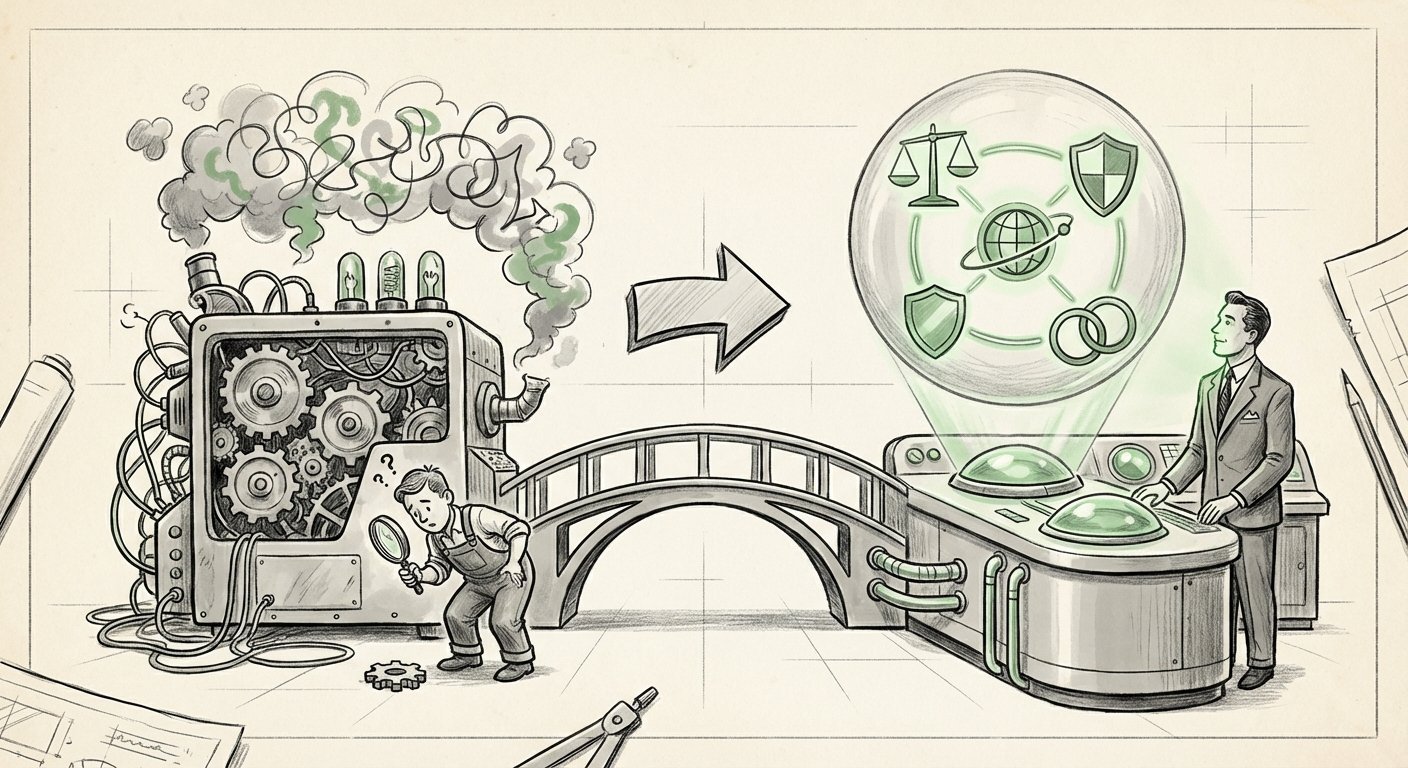
This is why the release is about more than two model names. It points to a future where AI is embedded in the decision layer of a business, not just the writing layer. That future is already starting to take shape, and omnimodal models are one of its building blocks.
From Chatbots to Decision Engines
The shift from chatbots to decision engines changes several things at once.
1. The output changes
A chatbot produces text. A decision engine produces an action, a ranking, a recommendation, or a next step. That output has to fit into a workflow. It has to be readable by another system. It has to be clear enough for a human to approve or reject.
2. The test changes
Chat quality is often judged by fluency and helpfulness. Decision quality is judged by outcomes. Did the model choose the right case to escalate? Did it recommend the right route? Did it save time without increasing risk? Those questions require different measurements.
3. The buyer changes
Chatbots are often bought by innovation teams. Decision models are bought by operations, finance, support, logistics, and risk teams. Those buyers care about error rates, audit trails, integration, and cost per decision. They are less impressed by a clever demo.
4. The risk changes
A bad chatbot answer can be annoying. A bad decision can cost money, harm a customer, or create a compliance problem. That raises the bar for testing, monitoring, and human oversight.
Liquid AI's release sits right at this intersection. It is a technical product, but its impact will be felt in how businesses think about automation.
What This Means for the Future of AI
The first implication is that specialized decision models will matter as much as general chat models. Not every task needs a giant model that can write poetry. Many tasks need a model that can look at mixed inputs and make a reliable call. Decision models are built for that job.
The second implication is that benchmarks will fragment. The AA Decision Index is one scoreboard. There will be others for different industries and different decision types. Buyers will need to learn which benchmark matches their work. A top score on a general decision index is useful, but it does not prove a model is best for insurance claims or warehouse routing.
The third implication is that agentic AI needs decision models. Agents are systems that can take actions on their own. To do that well, they need to decide what to do next, when to ask for help, and when to stop. A model that only generates text is a weak foundation for an agent. A model that is trained and evaluated on decisions is a much better fit.
The fourth implication is that omnimodal input will become expected. As AI moves into operations, it will have to deal with the same messy data that people deal with. Text-only models will still be useful, but they will not be enough for many high-value workflows.
The fifth implication is that governance gets harder and more important. Decisions need audit trails. Models need versioning. Humans need clear points of control. The more AI moves into decision-making, the more businesses will need to explain how a choice was made.
Practical Implications for Businesses
The release of d1.2 and d1.2-ultra is a prompt for business leaders to review how they use AI. Here are practical steps that make sense now.
- Audit your decision workflows. List the places where people make repeated choices: routing, approving, prioritizing, matching, flagging, and recommending. Those are the best candidates for decision AI.
- Test on your own data. Do not rely only on a leaderboard. Run a small pilot with your actual mixed inputs. Include the messy cases, not just the clean ones.
- Measure decision quality. Track accuracy, time saved, cost per decision, override rate, and auditability. A model that is slightly less accurate but much easier to audit may be the better choice.
- Prepare your data pipes. Omnimodal models need access to multiple data types. That means clean permissions, reliable storage, and a way to connect documents, images, records, and text.
- Keep humans in the loop. Start with recommendations, not autonomous actions. Let people approve decisions until the system has earned trust.
- Check total cost. A decision model may replace several steps in a workflow. That can save money. But integration, latency, and monitoring also cost money. Do the full math.
- Plan for governance. Log the input, the model version, the output, and the human override. If you cannot explain a decision later, you have a problem.
These steps are not specific to Liquid AI. They apply to any decision model. But the release makes them urgent. When a top model is positioned around decisions, buyers will start asking decision-focused questions. Vendors will have to answer them.
Risks and Open Questions
There are good reasons to be excited about omnimodal decision models. There are also good reasons to be careful.
Benchmark-to-production gap. A model can top a decision index and still fail in a specific workflow. Real data is messier, rules are local, and edge cases are common. Pilots matter more than leaderboard screenshots.
Data quality and privacy. Omnimodal models need more data, and more data means more risk. Businesses will need to know what data is used, where it is stored, and who can access it.
Accountability. If a model recommends a bad decision, who is responsible? The vendor, the builder, or the operator? Clear lines of responsibility are essential before high-stakes automation.
Over-automation. It is tempting to remove humans once a model performs well. But decision models can drift when the world changes. Human oversight is a safety net, not a temporary crutch.
Vendor lock-in. Decision models often sit deep inside workflows. That makes them harder to replace than a chat tool. Buyers should think about portability, data access, and exit plans.
What to Watch Next
The next signals will matter more than the launch itself. Watch for independent tests of d1.2 and d1.2-ultra outside the AA Decision Index. Watch for details on how the models handle mixed inputs in real workflows. Watch for pricing, latency, and deployment options, because those decide whether a model can be used at scale.
Also watch how competitors respond. If decision models become a category, more vendors will release models built for choices rather than conversation. That would be good for buyers. It would also make the AA Decision Index and similar benchmarks more important as filters.
Finally, watch how businesses adopt. The winners will not be the companies that rush to automate every decision. They will be the companies that pick the right decisions, test them carefully, and keep the right humans in control.
Conclusion
Liquid AI's release of d1.2 and d1.2-ultra is a small name change with a big implication. The company is not just shipping another model. It is putting omnimodal decision models at the center of the story. Topping the AA Decision Index gives that story a strong opening line.
The future of AI will not be judged only by how well it talks. It will be judged by how well it decides. That shift will change what businesses buy, how they measure success, and where they put humans in the loop. The companies that start preparing now will be ready when decision models move from the leaderboard to the workflow.